Maq’s Triad Protocol for Homeopathic Treatment
Based on extensive experience in homeopathic practice, Maq has developed a unique protocol that leverages the therapeutic potential of different potencies to address various aspects of a patient’s condition. This protocol, named Maq’s Triad Protocol, utilizes a systematic approach involving remedies in 1M, 30C, and 200C potencies to treat emotional, physical, and chronic symptoms respectively.
Protocol Overview
- Emotional Condition Remedy (1M Potency)
- Selection: A remedy is chosen based on the patient’s emotional state.
- Dosage: One dose of the selected remedy in 1M potency.
- Frequency: Administered once a month.
- Physical Symptoms Remedy (30C Potency)
- Selection: A remedy is chosen based on the patient’s current physical symptoms.
- Dosage: The selected remedy in 30C potency.
- Frequency: Administered three times daily for six days each week, and repeated every week.
- Chronic Condition Remedy (200C Potency)
- Selection: A remedy is chosen considering the patient’s chronic condition.
- Dosage: One dose of the selected remedy in 200C potency.
- Frequency: Administered once a week on the 8th day.
Key Principles of Maq’s Triad Protocol
- No Overlapping Remedies: Ensure that no two remedies are administered on the same day to avoid interference.
- Sequential Dosing: Follow the sequence strictly to maximize therapeutic benefits:
- 1M potency for emotional conditions, once a month.
- 30C potency for physical symptoms, three times daily for six days a week, repeated weekly.
- 200C potency for chronic conditions, once a week on the 8th day.
- Patient-Centric Approach: Tailor the remedies to each patient’s unique emotional, physical, and chronic conditions for personalised treatment.
Qualified Oversight:
This protocol should be administered under the guidance of a qualified homeopath or healthcare professional. It is essential that the remedies and their potencies are selected based on a thorough evaluation of the patient’s individual conditions and needs. A qualified practitioner will ensure that the protocol is applied appropriately and monitor the patient’s progress to make any necessary adjustments to the treatment plan.
Disclaimer:
The information provided in Maq’s Triad Protocol is based on Maq’s personal experience and practice in homeopathy. It is not intended to replace professional medical advice, diagnosis, or treatment. The effectiveness of homeopathic treatments can vary among individuals and should be evaluated on a case-by-case basis. Always consult a qualified healthcare provider for any questions or concerns regarding medical conditions or treatments. The outcomes of homeopathic treatments are not guaranteed, and ongoing professional oversight is recommended to ensure the best possible results.
Example: Implementation of Maq’s Protocol
Here is an example of how Maq’s Triad Protocol can be implemented in a real-life case:
Case Study: Management of Suspected Diabetic Gangrene with Homeopathic Medicine
Patient Profile:
- Name: [Redacted]
- Age: 70 years
- Medical History: The patient is diabetic but cannot take conventional diabetic medications due to severe allergies.
Initial Consultation:
- Date: 5th May
- Presenting Complaints:
- Severe ulcerations on both lower legs.
- Active bleeding and pus discharge from the wounds.
- Significant itching and discomfort.
- Frequent need to change bed sheets due to exudate from the ulcers.
Clinical Examination:
- Findings from Images:
- Image Analysis: The initial images from 5th May show extensive skin damage on both legs. Lesions exhibit characteristics typical of diabetic gangrene:
- Coloration: Areas of necrosis with darkened skin patches, suggesting poor blood circulation and tissue death.
- Ulcerations: Multiple open wounds with irregular borders, showing signs of infection including pus and blood.
- Inflammation: Surrounding skin is inflamed, indicating an active infectious process.
- Texture: The skin appears hardened and dry, with visible scabs and crusting over some lesions.


Treatment Plan Initiated:
- Homeopathic Medicines Prescribed:
- Arsenicum Album 1M: Single dose administered on the first day.
- Carbo Vegetabilis 30C: Administered three times daily for six days each week, and repeated every week.
- Silicea 200C: Single dose administered on the eighth day.
- Dosage Schedule:
- Arsenicum Album 1M: To be taken once monthly.
- Carbo Vegetabilis 30C: To be taken three times daily for six days each week.
- Silicea 200C: To be taken once every week.
Follow-Up Consultations:
- Date: 23rd May
- Patient Report:
- Symptom Improvement:
- No more pus discharge.
- Cessation of bleeding from the wounds.
- Significant reduction in itching.
- Clinical Observation:
- Healing of the ulcerations with noticeable reduction in inflammation.
- No new lesions formed.
- Existing lesions showing signs of healing with reduced necrosis.
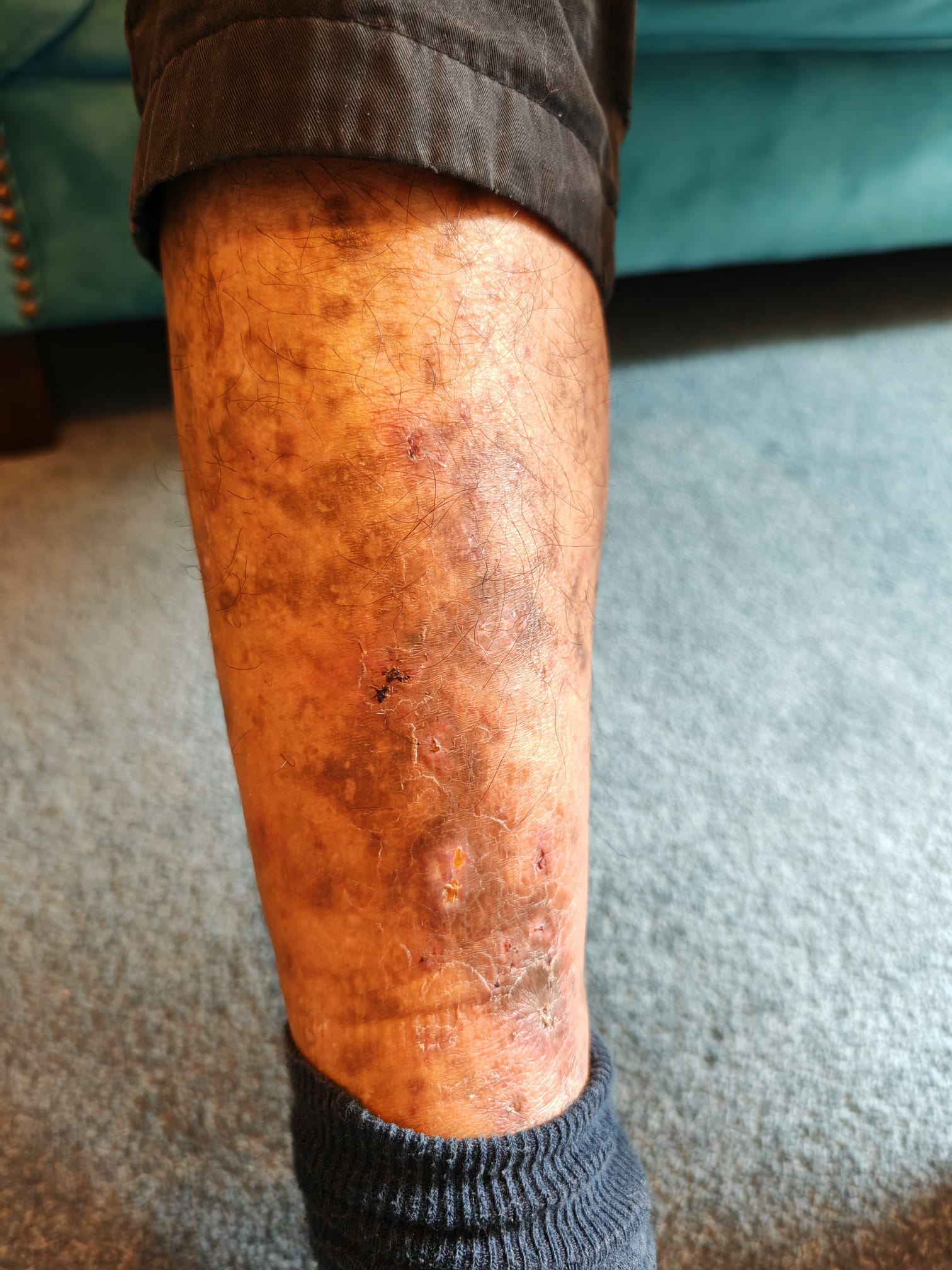

- Date: 22nd July (Final Consultation)
- Patient Report:
- The patient reported no ongoing issues and expressed satisfaction with the treatment outcome. He stated that the itching, bleeding, and pus have resolved.
- Clinical Observation and Images:
- Significant improvement: The skin has healed with reduced necrosis and diminished inflammation. Black spots remain but are not problematic for the patient.
Images:
Discussion:
The patient’s condition, characterised by diabetic gangrene, demonstrated notable improvement with the prescribed homeopathic treatment. The selected homeopathic remedies were chosen to address specific symptoms and support the healing process, considering the patient’s allergies to conventional medications.
- Arsenicum Album 1M: Administered with the objective of addressing symptoms commonly associated with gangrenous conditions and supporting overall vitality.
- Carbo Vegetabilis 30C: Utilized to assist in managing infection, improving circulation, and supporting detoxification processes.
- Silicea 200C: Aimed at supporting wound healing and reducing inflammation.
This case highlights the potential benefits of individualized homeopathic treatment for managing diabetic complications, particularly when conventional treatments are not suitable. Further research and clinical trials are necessary to substantiate the efficacy of these remedies for similar conditions.


Conclusion:
The homeopathic treatment regimen resulted in significant improvements in the patient’s condition. The reduction in pus discharge, cessation of bleeding, and healing of ulcerations indicate a positive response to the treatment. Ongoing monitoring and adherence to the prescribed treatment plan are essential for continued recovery and the prevention of recurrence.
Recommendations:
- Regular Follow-Up: Ongoing monitoring is recommended to track healing progress and detect any signs of recurrence early.
- Hygiene Maintenance: Strict adherence to hygiene practices is advised to minimize the risk of secondary infections.
- Dietary Modifications: Implementing a diabetes-friendly diet may support better blood sugar management and complement the overall treatment plan, considering the patient’s medication allergies.
This case highlights the potential benefits of homeopathic medicine in managing complex diabetic complications and provides a viable alternative for patients with contraindications to conventional treatments. Further research and clinical trials are needed to establish more robust evidence of its efficacy.
Disclaimer:
The information provided in this protocol is based on Maq’s personal experience and practice in homeopathy. It is not intended to replace professional medical advice, diagnosis, or treatment. Always consult a qualified healthcare provider with any questions regarding a medical condition. The effectiveness of homeopathic treatments can vary and should be evaluated on a case-by-case basis. Use this protocol at your own discretion.
 Maq Masi Blog
Leave a comment