
Slow down and enhance the quality of life.
Doing nothing allows us to embrace peace.
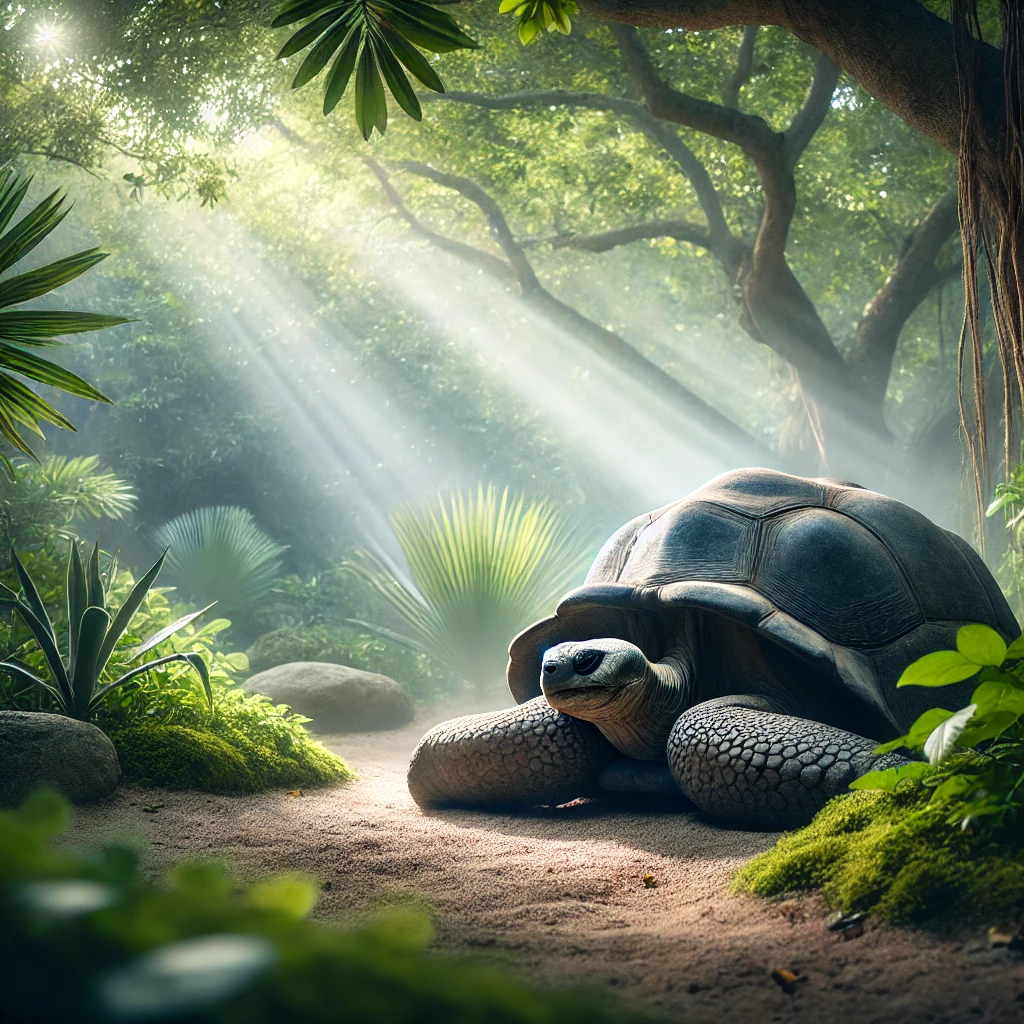
During a recent trip to Lausanne, Switzerland, I visited the Tropiquarium in Servion, a serene place where nature and wildlife coexist harmoniously. Of all the fascinating creatures there, the Aldabra giant tortoises left a lasting impression on me. Massive and slow-moving, these ancient creatures seemed to carry not only the weight of their shells but the very essence of time on their backs.
Watching the tortoises slowly move through their habitat made me reflect on the fast pace of modern life. While we rush from one task to the next, these creatures live in slow, deliberate movements, seemingly content with the passage of time. Their presence whispered a quiet truth: life doesn’t have to be lived in a hurry.
Not long after this visit, my son asked me a profound question: “Papa, how can we live longer?”
I found myself thinking of the tortoises again, their calm and patient existence. I answered, “Maybe we need to slow down, like the tortoises.”
“Why?” he asked, with that curiosity only children seem to have.
“When we slow down, we notice more,” I replied. “It’s not just about living longer in years but living more deeply, more fully.”
His next question came naturally: “What do we do to slow down?”
I suggested something simple yet powerful: “Try doing nothing for a little while every day.”
He looked confused. “Doing nothing? What does that mean?”
“Exactly that,” I explained. “Find a comfortable spot, and just sit there. No phone, no computer, no distractions. Don’t read or listen to anything. Just be.”
Skeptical but intrigued, he agreed to try. The first day was difficult, as I expected. He told me later that the stillness felt unnatural, that time seemed to stretch on forever. His mind raced, and sitting without doing anything felt challenging. But after a few days of practice, something shifted. He began noticing changes—his sleep improved, his mind became clearer, and he found himself able to reflect more deeply on his actions.
In those quiet moments, he discovered that doing nothing allowed him to revisit memories, plan for the future, and see things with a new clarity. The stillness didn’t feel so daunting anymore; it became a source of peace and perspective.
The key, he later told me, wasn’t in how long he sat in silence but in doing it consistently. “It’s about making it a regular practice,” he said. “If you do it every day, you start to see the benefits.”
We also talked about how this silence helped him live in the present. So often, we find ourselves watching television or scrolling through our phones, barely paying attention to what we’re consuming. We rush through meals, missing the richness of the flavors and textures. But when we slow down, we can reconnect with these simple pleasures and enjoy them more fully.
In a world that constantly urges us to do more, be more, and go faster, this practice of stillness has been transformative. It reminded me of something the ancient philosopher Lao Tzu once said: “By letting go, it all gets done.” Sometimes, in our rush to achieve, we lose sight of the beauty in simply being.
The Aldabra tortoises live at their own slow, steady pace, and perhaps that’s why they live such long lives. By slowing down, they not only survive but thrive. My son’s experience has shown me that we too can benefit from this slow, deliberate approach to life. Through his own practice of sitting in stillness, he found clarity, improved sleep, and a deeper sense of awareness.
Slowing down doesn’t just help us live longer; it helps us live better. In today’s fast-paced world, taking the time to simply be—to sit in stillness without distractions—can offer more benefits than we realise. The lesson from the tortoises, and now from my son’s own journey, is simple yet profound: in slowing down, we not only extend our years but enrich the moments within them. And sometimes, all it takes is doing nothing at all.
 Maq Masi Blog
Leave a comment