
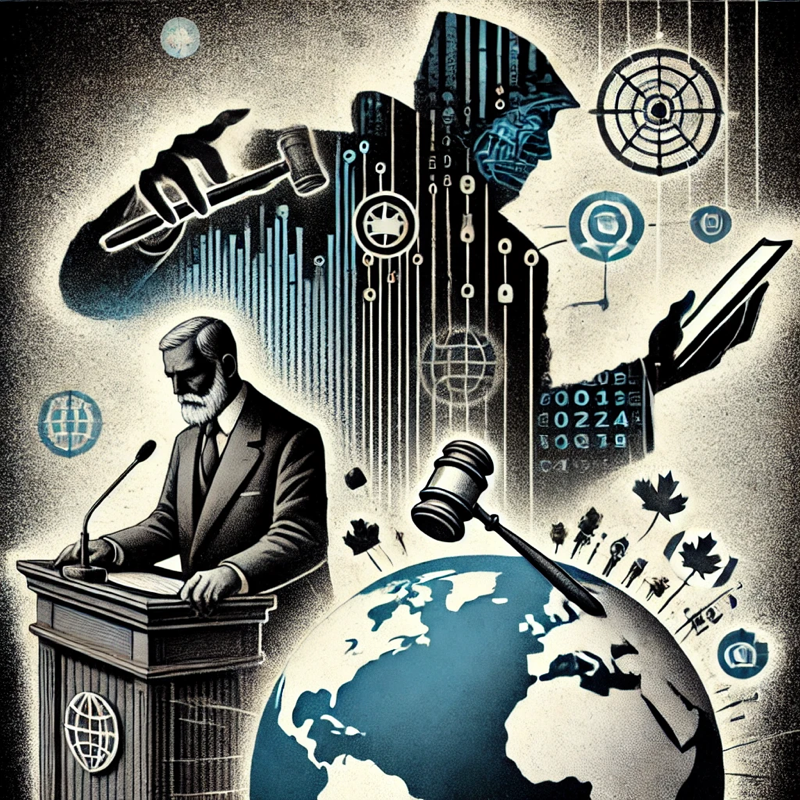
The modern world is witnessing a convergence of politics and technology that is reshaping democracies, redefining sovereignty, and stripping individuals of agency. This alliance doesn’t just wield power—it manufactures consent, subtly transforming citizens into followers and skeptics into unwitting supporters. This isn’t a conspiracy theory; it’s a reality unfolding before our eyes, fueled by data, algorithms, and unchecked ambition.
Consider the influence of political campaigns that have blurred the lines between governance and manipulation. In the 2008 U.S. presidential election, Barack Obama’s campaign leveraged data analytics to unprecedented effect, setting a new standard for how elections are won. David Cameron in the UK adopted similar strategies, securing a surprising second-term majority. Both campaigns showcased the power of data but also revealed its darker side: the weaponisation of voter information to shape public opinion.
India’s political landscape adds another dimension. Reports link Cambridge Analytica, a British data analytics firm, to election campaigns, raising ethical questions about manipulating millions of voters. Whether or not the allegations are true, the implications are undeniable—elections now hinge as much on algorithms as on policies, turning democracy into a game of data and perception.
Enter Donald Trump, whose rhetoric about “buying Greenland,” integrating Canada as a U.S. state, and reclaiming the Panama Canal reveals an unsettling worldview. Greenland, with its rich resources and strategic location, is not just a patch of land—it’s a sovereign territory. To suggest its purchase is to trivialise its people’s autonomy. Similar remarks about Canada and the Panama Canal further underscore a pattern: a rhetoric of dominance disguised as ambition. This is more than a political quirk—it’s a chilling glimpse of sovereignty reduced to a negotiable asset.
Platforms like X (formerly Twitter) amplify such rhetoric, embedding it into public discourse. Algorithms amplify divisive ideas, turning them into trends, shaping perceptions, and making even the most outlandish suggestions feel plausible. This is not free speech; it’s a calculated manipulation of public opinion, turning leaders into influencers and citizens into consumers of tailored narratives.
The implications are staggering. Political leaders and tech moguls like Elon Musk create a feedback loop where power perpetuates itself. Musk’s involvement during the UK’s attempts to control incendiary online content is a stark example. By enabling the rapid spread of inflammatory material, Musk positioned himself as a guardian of free speech. Yet, his actions undermined governmental authority and societal cohesion, highlighting the unchecked power of technology.
This partnership between politics and technology threatens to redefine democracy. When algorithms decide what we see and whom we trust, elections become less about choice and more about influence. Leaders exploit this dynamic, amplifying their agendas through platforms that reach millions in milliseconds.
What does this mean for us? Our sovereignty—both personal and national—is eroding. Narratives are crafted not to inform but to control. The same technology that connects us also confines us, creating a reality where dissent is suppressed, and consent is manufactured.
To counter this, we must act decisively:
• Governments must enforce strict regulations on data use and demand transparency in algorithmic decision-making.
• Citizens must educate themselves about the ways they are influenced and demand accountability from both political leaders and tech moguls.
• Tech leaders must acknowledge their societal responsibilities and prioritise ethics over profit.
The battle for sovereignty is no longer fought on borders but on servers and in the hearts and minds of people. If we do nothing, we risk becoming pawns in a game we didn’t choose to play. But if we resist—if we question, challenge, and demand better—we can reclaim democracy not as a relic of the past but as a beacon for the future.
Because in this new world, the greatest threat to freedom isn’t tanks or guns—it’s silence.
 Maq Masi Blog
Leave a comment