
The Patel Story: Tradition, Transformation, and Triumph
Abstract
The Gujarati Patel communities, encompassing Leva, Kadva, Matiya, Muslim Patels (Momin/Momna), Anjana, and Chaudhary, collectively known as Kanbis, have a rich history rooted in medieval Gujarat as village headmen and landowners. This article traces their evolution from peasant farmers to a globally influential community, emphasising their socio-economic rise during the British Raj and their modern diaspora. Addressing queries on their ancestral origins, it examines their Indo-Aryan and indigenous South Asian (Dravidian-related) ancestry, detailing the Indo-Aryan migration path from the Central Asian steppes to Gujarat. Using genetic studies, historical records, and scholarly works, this account provides an evidence-based narrative, celebrating their tradition, transformation, and triumph.
Introduction
The Gujarati Patel communities, renowned for their entrepreneurial spirit and cultural resilience, have left an indelible mark on Gujarat and the global diaspora. This article explores their history, from their medieval origins as Kanbi farmers to their transformation into Patidars, meaning “landholders,” and their modern triumphs in business and society. A central focus is clarifying their ancestral origins, specifically their mixed Indo-Aryan and indigenous South Asian (Dravidian-related) ancestry, including the Indo-Aryan migration path from the Central Asian steppes to Gujarat. By integrating genetic studies, historical records, and scholarly analyses, this narrative offers a comprehensive and evidence-based account, avoiding unverified claims like descent from mythological figures.
Origins and Early History
The Patels likely emerged during medieval times (1000–1757 CE) under dynasties like the Solankis and Mughals. The surname “Patel” derives from the Prakrit paṭṭaïl(l)a-, meaning “village headman,” reflecting their role in managing village affairs and collecting taxes (Bhakta, 2002, p. 5). As part of the Kanbi community, they were peasant farmers who gained administrative roles, adopting titles like Patel, Desai, and Amin (Khare, 1969, p. 15). British-era records, such as the Imperial Gazetteer of India (1908), describe them as Gujarat’s most important cultivating caste, highlighting their early prominence (Imperial Gazetteer, 1908, p. 245).
During the Mughal period, Kanbis served as village tax collectors, solidifying their role as Patels. Mughal land revenue systems relied on local headmen, and Kanbis filled this role in Gujarat, enhancing their social status (Khare, 1969, p. 20). Subcastes began to form, with Leva Kanbis in central Gujarat and Kadva Kanbis in northern Gujarat, reflecting regional differences in land tenure and social organisation (Shah, 1982, p. 15).
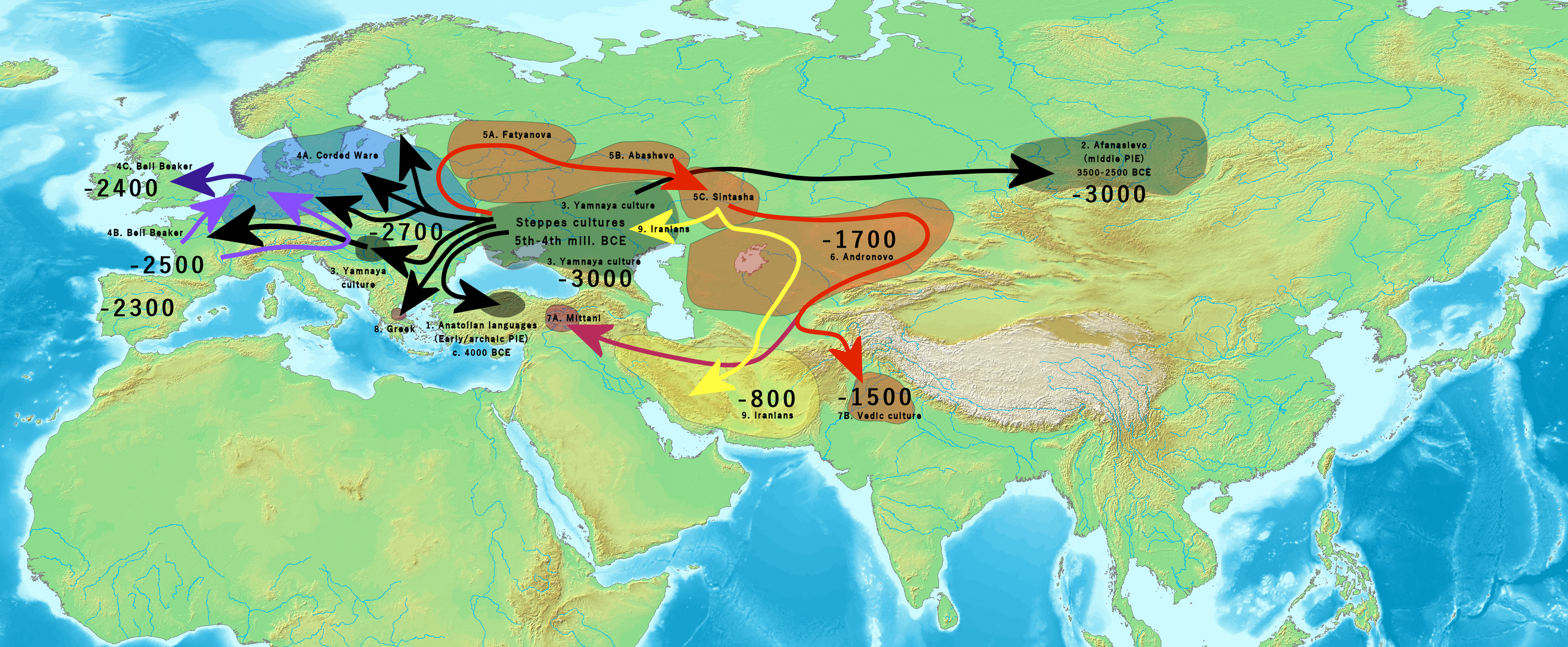
Map elements by पाटलिपुत्र & Koba-chan, background from DEMIS Mapserver, CC BY-SA 3.0
Indo-Aryan or Dravidian: Ancestral Origins and Migration Path
The Patels’ ancestry reflects a blend of Indo-Aryan migrants and indigenous South Asian populations, often associated with Dravidian or related groups. Genetic, historical, and cultural evidence, combined with the Indo-Aryan migration path, clarifies their origins.
- Genetic Evidence: South Asians, including Gujaratis, have ancestry from Ancestral North Indian (ANI), linked to Indo-Aryan migrations from the Central Asian steppes (2000–1500 BCE), and Ancestral South Indian (ASI), associated with indigenous populations, including those culturally or linguistically Dravidian (Reich et al., 2009, p. 489; Basu et al., 2016, p. 1594). Gujaratis, including Patels, show a balanced mix of ANI (30–70%) and ASI (30–70%), with haplogroups like R1a (steppe-derived) and J2 (South Asian) prevalent (23andMe, Patel Surname). This confirms the Patels’ mixed Indo-Aryan and indigenous ancestry, with ASI often linked to Dravidian-related groups.
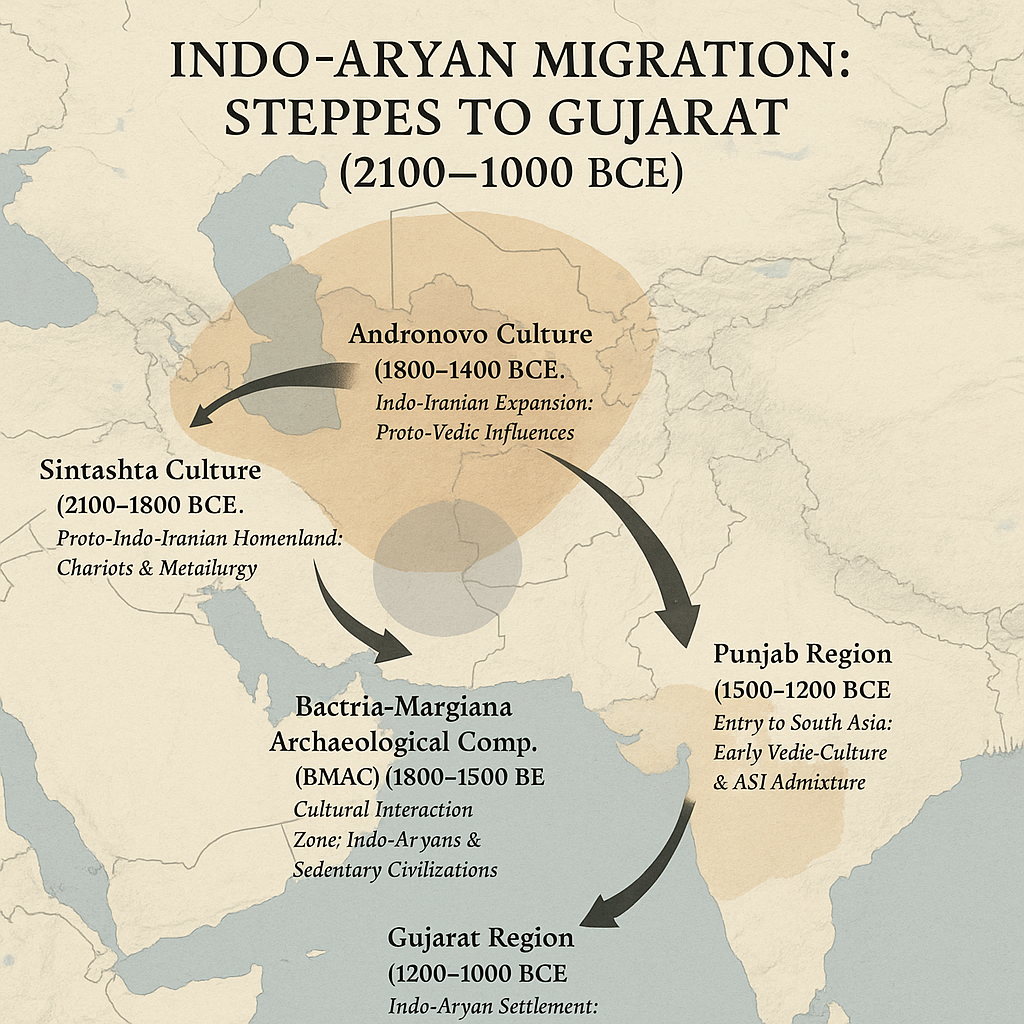
- Migration Path: The Indo-Aryans, ancestors of the Patels’ ANI component, followed a distinct path to Gujarat:
- Sintashta Culture (2100–1800 BCE): Originating in the southern Ural Mountains (modern Kazakhstan/Russia, ~50°N, 60°E), the Sintashta culture, Proto-Indo-Iranian, featured chariots and Vedic-like rituals (Anthony, 2007, p. 45).
- Andronovo Culture (1800–1400 BCE): Spreading across Central Asian steppes (Kazakhstan, Uzbekistan, ~45–50°N, 50–70°E), Indo-Aryans moved south as pastoralists.
- Bactria-Margiana Archaeological Complex (BMAC) (1800–1500 BCE): In northern Afghanistan and Turkmenistan (~37–40°N, 60–66°E), Indo-Aryans interacted with the BMAC, adopting agricultural practices (Wikipedia, Indo-Aryan migrations).
- Punjab (1500–1200 BCE): Entering South Asia via the Hindu Kush, Indo-Aryans settled in northwest India/Pakistan (~30–32°N, 70–74°E), establishing Vedic culture and intermixing with ASI populations.
- Gujarat (1200–1000 BCE): Indo-Aryans spread to Gujarat (~20–24°N, 68–74°E), intermixing with indigenous agrarian communities, likely Kanbi ancestors, shaping the Patels’ mixed ancestry (Shah, 1982, p. 10).
- Historical Context: The Patels, as Kanbis, likely emerged from indigenous communities in Gujarat, with ASI ancestry predating Indo-Aryan arrivals (Shah, 1982, p. 10). Their adoption of Gujarati, an Indo-Aryan language, and Vedic practices reflects Indo-Aryan influence, while their agrarian roots suggest indigenous continuity.
- Cultural Identity: Linguistically Indo-Aryan, Patels speak Gujarati and follow Vedic Hindu practices, such as the worship of Umiya Mataji by the Kadava Patels (based in Unjha, North Gujarat), Khodiyar Mataji by the Leva Patels (Khodiyar dham in rajkot Dostrict ), Arbuda Mataji by the Anjana Chaudharis (worshipped at Mount Abu in Rajasthan,
and regional deities like Bahuchar Mata and Meldi Mata by the Matiya Patels of Saurashtra and Central Gujarat as their caste deities.
Momin or Momna Patels, who trace their roots to the same agrarian Kanbi heritage, embraced Islam over centuries—particularly under the influence of Sufi saints in Gujarat—while preserving aspects of their communal identity, language, and values such as industriousness, modesty, and family cohesion. Their practices reflect a synthesis of Islamic faith and Gujarati cultural ethos. Gujarat’s history, influenced by the Indus Valley Civilisation and Dravidian-speaking regions, supports a blended heritage, with ASI ancestry tying to Dravidian-related groups. - Debates: The Aryan migration theory is mainstream, supported by archaeology and genetics (Anthony, 2007, p. 45). The Indigenous Aryanism theory, positing Indian origins for Aryans, lacks scholarly support but reflects cultural sensitivities (Wikipedia, Indigenous Aryanism). The Patels’ mixed ANI-ASI ancestry transcends these debates.
British Raj and Socio-Economic Rise
The British Raj (1757–1947 CE) transformed the Patels. Land reforms elevated Kanbis to Patidars via systems like narwadari in Kheda, protecting land interests (Imperial Gazetteer, 1908, p. 245). By 1891, about 10% of Leva and Kadva Kanbis were literate (Shah, 1982, p. 35). The 1901 Census of India notes their agricultural prominence (Census of India, 1901, p. 132). They diversified into trade and established cooperatives like Amul (Khare, 1969, p. 50).
Modern Era and Global Diaspora
In the 19th and 20th centuries, Patels embraced reforms, with Matiya Patidars abolishing dowry (wematiya.com, n.d.). They migrated to East Africa, thriving as traders (Mehta, 2001, p. 1740), and later to the UK, USA, and Canada after events like Uganda’s 1972 expulsion of South Asians (Bhakta, 2002, p. 10). In the USA, Patels control over 40% of motels (Bhakta, 2002, p. 12). Organisations like the Leuva Patidar Samaj of USA maintain cultural ties (lpsofusa.com, n.d.). In Gujarat, Patels (12–14% of the population) excel in politics, business, and agriculture (Shah, 1982, p. 40).
Subcastes and Cultural Diversity
The Patel community includes:
- Leva Patidars: Central Gujarat, strong in commerce and education (Khare, 1969, p. 20).
- Kadva Patidars: Northern Gujarat, primarily farmers (Shah, 1982, p. 15).
- Matiya Patidars: Southern Gujarat, progressive reformers (wematiya.com, n.d.).
- Muslim Patels: Converted Hindu Kanbis, sharing cultural traits (Bhakta, 2002, p. 7).
- Anjana and Chaudhary: Regional Kanbi subgroups (Shah, 1982, p. 18).
Genetic and Historical Insights
Genetic studies confirm the Patels’ mixed ANI (Indo-Aryan) and ASI (indigenous, Dravidian-related) ancestry, with haplogroups like R1a and R5a2 common (Basu et al., 2016, p. 1594; 23andMe, Patel Surname). British-era records document their socio-economic status (Imperial Gazetteer, 1908, p. 245; Census of India, 1901, p. 132). Historians Shah and Khare highlight their Shudra origins and mobility (Shah, 1982, p. 10; Khare, 1969, p. 15).
Contributions of Researchers and Historians
- R. S. Khare: Analyses Patel modernisation, noting agrarian roots (1969, pp. 15–50).
- Ghanshyam Shah: Details socio-economic rise, emphasizing indigenous origins (1982, pp. 10–40).
- Makrand Mehta: Explores East African diaspora (2001, pp. 1738–1747).
- David W. Anthony: Clarifies Indo-Aryan steppe origins (2007, p. 45).
- David Reich: Confirms mixed ANI-ASI ancestry (2009, p. 489).
Addressing Unverified Claims
- Descent from Rama: Claims linking Leva Patels to Lava and Kadva Patels to Kush are folklore (Shah, 1982, p. 10).
- Kshatriya/Vaishya Status: Some claim Kshatriya or Vaishya status, but historians suggest Shudra origins (Shah, 1982, p. 12).
Historical Timeline of Patel Communities
| Period | Key Developments | Subcastes Involved |
|---|---|---|
| Medieval (1000–1757 CE) | Kanbis serve as village headmen, adopt Patel title | Leva, Kadva, Anjana, Chaudhary |
| Mughal Era (1526–1757 CE) | Kanbis become tax collectors, solidify Patidar identity | Leva, Kadva, Muslim Patels |
| British Raj (1757–1947 CE) | Land reforms elevate Kanbis to Patidars; narwadari system strengthens Leva Kanbis | Leva, Kadva, Matiya |
| Modern (1947–Present) | Migration to East Africa, UK, USA; dominance in hospitality and cooperatives | All subcastes |
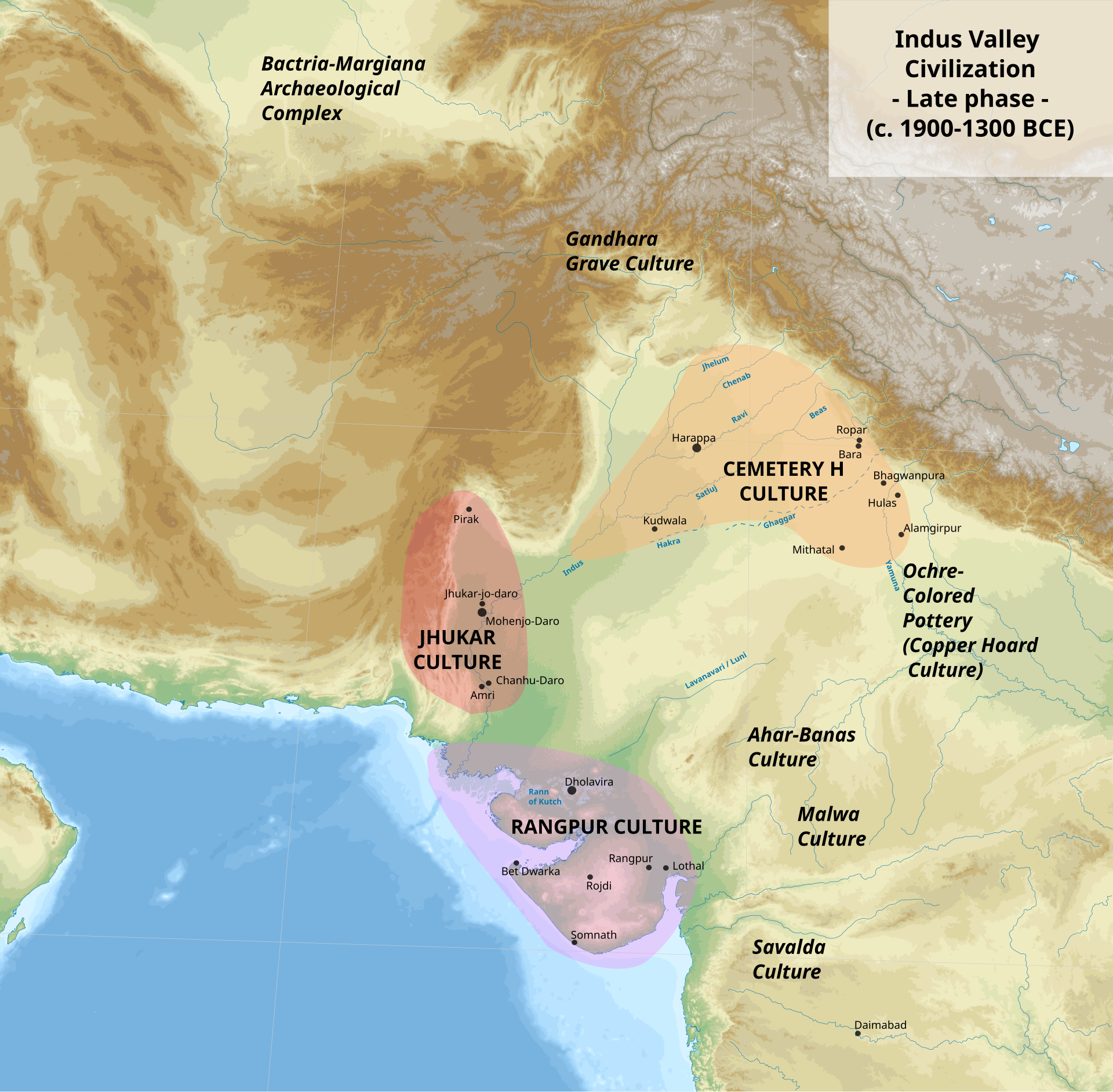
Map adapted from Yodaspirine, CC BY-SA 4.0
Conclusion
The Gujarati Patel communities have a storied history, from medieval village headmen to global entrepreneurs. Their ancestry blends Indo-Aryan migrants, who migrated from the Central Asian steppes through Punjab to Gujarat (2100–1000 BCE), with indigenous South Asian populations, often associated with Dravidian-related groups. Genetic studies confirm this mixed Ancestral North Indian (ANI) and Ancestral South Indian (ASI) heritage, while their Indo-Aryan language and culture reflect Gujarat’s diverse history. This account, grounded in verified sources, celebrates their tradition, transformation, and triumph.
Bibliography
- Anthony, D. W. (2007). The Horse, the Wheel, and Language: How Bronze-Age Riders from the Eurasian Steppes Shaped the Modern World. Princeton University Press, p. 45. Available at Amazon
- Basu, A., et al. (2016). Genomic reconstruction of the history of extant populations of India reveals five distinct ancestral components and a complex structure. Proceedings of the National Academy of Sciences, 113(6), 1594–1599. Available at PNAS
- Bhakta, G. B. (2002). Patels: A Gujarati Community History in the United States. UCLA Asian American Studies Center, pp. 5, 7, 10, 12. Available at Amazon
- Census of India (1901). Volume 5, Part 1: Bombay Presidency. Government of India, p. 132. Available at Archive.org
- Imperial Gazetteer of India (1908). Volume 12. Oxford: Clarendon Press, p. 245. Available at Archive.org
- Khare, R. S. (1969). The Patidars of Gujarat: A Study of Modernization and Caste. University of Chicago Press, pp. 15, 20, 50. Available at Amazon
- Mehta, M. (2001). Gujarati business communities in East African diaspora. Economic and Political Weekly, 36(20), 1738–1747. Available at JSTOR
- Reich, D., et al. (2009). Reconstructing Indian population history. Nature, 461, 489–494. Available at Nature
- Shah, G. (1982). Caste, Class, and Power: Changing Patterns of Stratification. Oxford University Press, pp. 10, 15, 18, 35, 40. Available at Amazon
- 23andMe: Patel Surname (n.d.). Accessed 16 May 2025.
- Leuva Patidar Samaj of USA (n.d.). Accessed 16 May 2025.
- Matiya Samaj (n.d.). Accessed 16 May 2025.
- Wikipedia: Indigenous Aryanism (n.d.). Accessed 16 May 2025.
- Wikipedia: Indo-Aryan migrations (n.d.). Accessed 16 May 2025.
- Yodaspirine Map Yodaspirine. Indo-European Migrations. Wikimedia Commons. CC BY-SA 4.0. Last modified 2021.
https://commons.wikimedia.org/w/index.php?curid=99207343. - पाटलिपुत्र and Koba-chan Map पाटलिपुत्र and Koba-chan. Map with Background from DEMIS Mapserver. Wikimedia Commons. CC BY-SA 3.0.
https://commons.wikimedia.org/w/index.php?curid=97177975
 Maq Masi Blog
Leave a comment