
Echoes of an Empty Playhouse– Real Story
(By Maq Masi)
It began with a whisper, soft as a summer breeze through an open window.
“You should get a pet,” my friend murmured, a knowing glint in his eye. My sons, still boys on the cusp of adulthood, erupted in a chorus of joyous shouts, their imaginations already conjuring a furry companion. I exchanged a glance with my wife—a flicker of uncertainty, mingled with quiet intrigue. What was he planning?
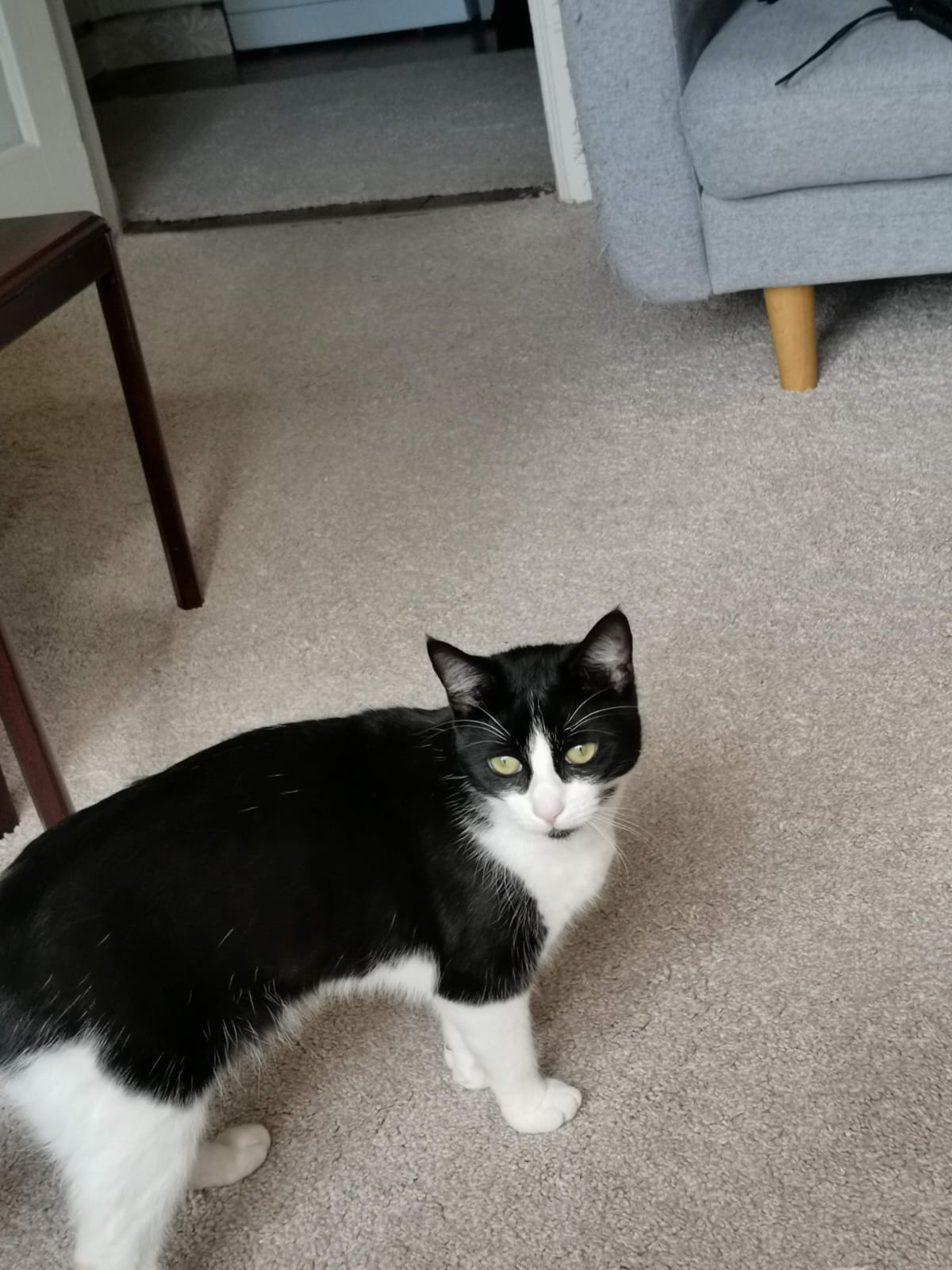
Days later, he appeared at our door, cradling a tiny creature in his palms—a piebald kitten, her black and white markings scattered like clouds stitched into velvet. Barely two weeks old. Motherless. Trembling. My heart lurched. How could we possibly care for something so fragile?
He set down a litter tray with calm certainty: “Show her once, and she’ll know.” I doubted it—but she did. Perfectly. Every time.
There was something about her—instinctive, intuitive, astonishing. My wife told her once, gently, not to climb on the stove. She never did again. Each morning, she would knock at our bedroom door, and when we opened it, she would turn and lead us downstairs like a pint-sized queen.
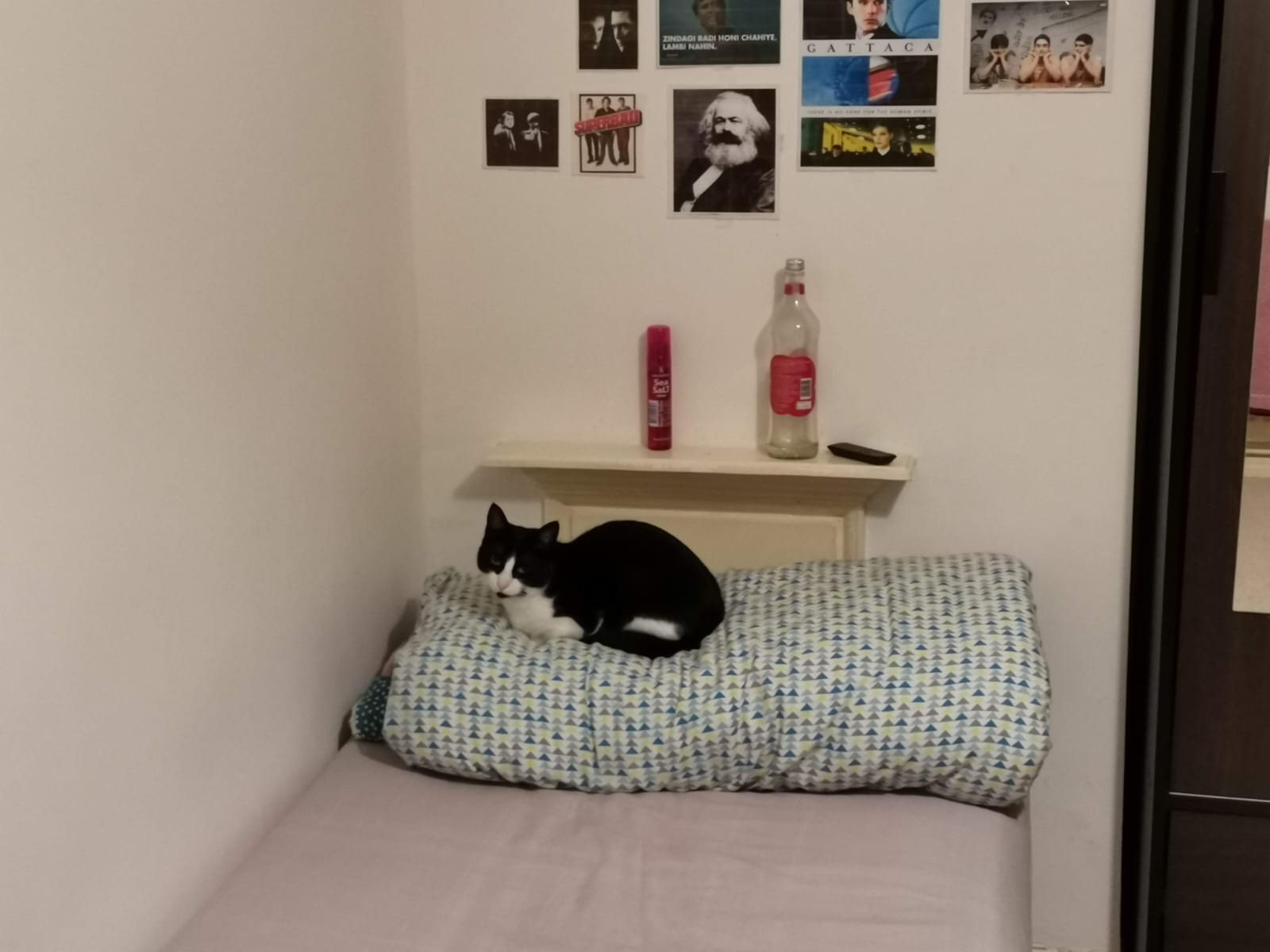
And then, the unexpected. She began mimicking us. Her meows curled into sounds like “hello” and “out”. She even tried to say “mum” when the boys called out to my wife. My sons laughed, delighted. I sat quietly, wondering what else she might learn, what else she understood without ever being taught.
But life intervened. Business called. Travel demanded. With aching hearts, we entrusted her to my friend’s neighbour, a widower who had just lost his own cat. Seeing her later curled in his lap—content, at peace—felt like losing a small part of ourselves.
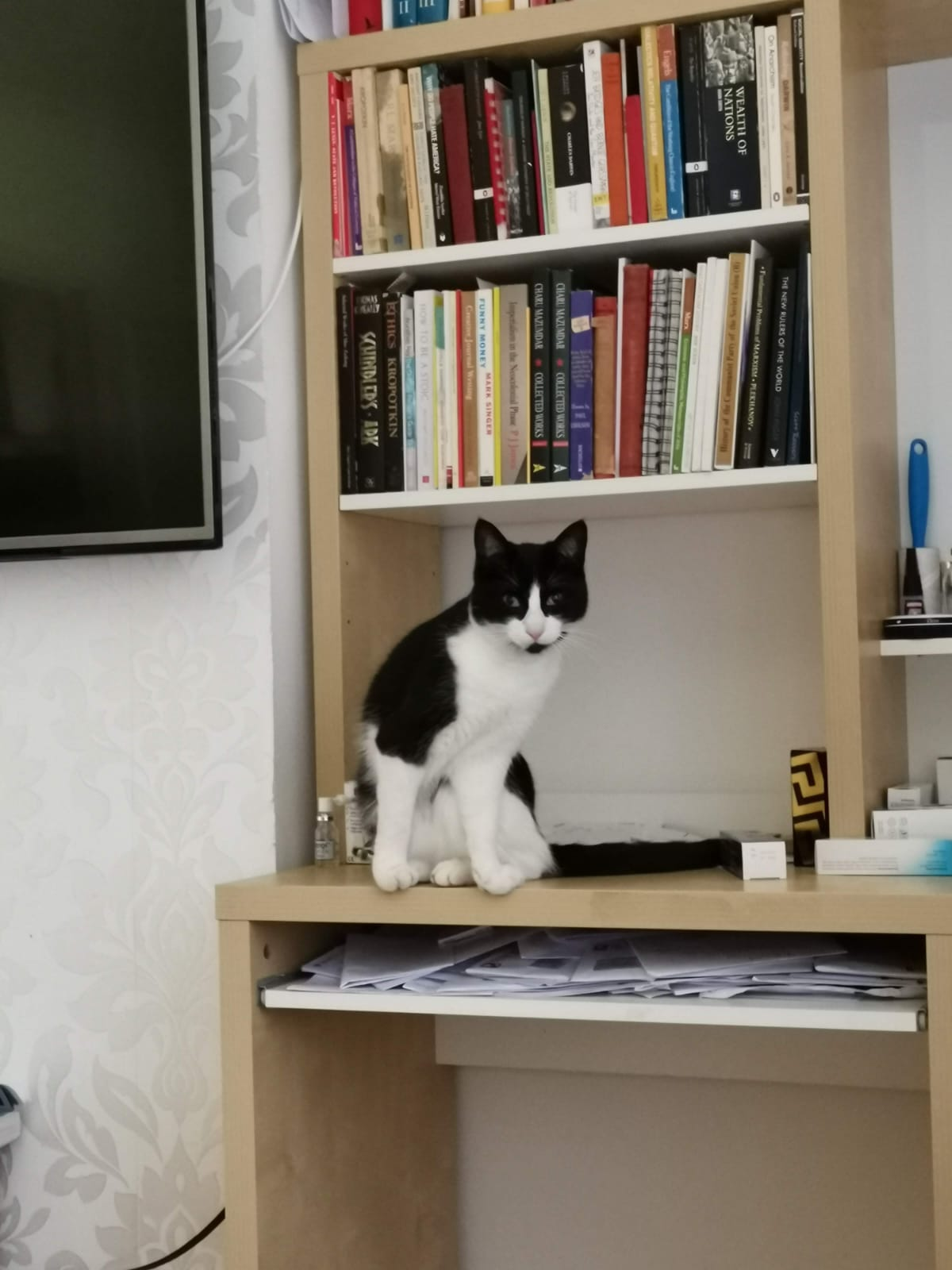
The deeper wound came earlier: her neutering. The plastic collar weighed on her like a punishment she didn’t understand. Her eyes, dulled with pain, searched ours for answers. My wife cried. I couldn’t look away. That helplessness, that powerlessness, would return again.
The house grew quieter. Our sons became men. Their footsteps faded into independence. But we were still young—full of life, and something was missing. I had never had a sister, and though I was blessed with two sons, I longed for a daughter. A girl. Her voice, her softness, her difference.
My wife’s eyes lit up. My sons didn’t hesitate. They believed in me—a man shaped by challenges, seasoned with love, and certain in his purpose.
But our house was small: two bedrooms, one shared by our sons. No space for a child.
We sold it.
We left the city’s relentless rhythm for a quiet town, three bedrooms, a garden, a winding driveway that seemed to whisper: “Begin again.” It took months to adjust. I adapted, eventually. My sons missed the life they knew. We had made a choice that none of us dared speak of as permanent—yet we were committed.
And so, we began the adoption journey.
Our social worker visited fortnightly, kind and perceptive, gently unpeeling the folds of our story. Training followed—trauma, neglect, therapeutic parenting. The evenings were full, our minds stretched.
Paperwork came next—more intricate than anything we imagined. Police clearance from two countries. Ancestral details. Financial disclosures. Medical reports from a reluctant GP, with fees for every form. Friends and family offered references. We were grateful, hopeful, ready.
Then came a new obstacle. Our sons, now adults, required their own rooms—a condition we hadn’t anticipated. We didn’t sell our home this time. Instead, we purchased an additional four-bedroom house back in the city—practical for work, university travel, and closer to our roots. It had a spacious garden, a long private driveway, and most striking of all—a playhouse already built, as though it had been waiting for her all along.
It felt like returning—not just to the city, but to the hope we’d carried with us.
The process deepened. Every step brought new requests—a police clearance for a year I had once spent abroad. Six months to obtain. New medicals. More training. Identity workshops. Trauma education. Night after night we studied, read, watched, and discussed. We became better parents for a child we hadn’t met.
We joined an adoption group. A small community of dreamers, resilient and ready. Many were matched within a year. Some adopted twice. A few adopted siblings. We cheered for them, shared in their joy.
But for us, time slowed.
We scoured the agency’s matching site, reading profile after profile, each one a tender glimpse into a life already shaped by hardship. For every child we felt a connection to, we wrote letters of interest—dozens of them over the years.
Each letter was a quiet act of hope.
We explained what we could offer—not just a room, but a home full of warmth, rhythm, and safety. We shared our experience raising two boys into confident young men, our ability to listen without judgement, to notice small things, to hold space for big feelings.
We acknowledged the challenges—attachment difficulties, trauma triggers, identity needs—and we did not flinch. We described what we had learned about therapeutic parenting, about the importance of play, trust, and routine. We wrote with care about how our culture would not overwhelm theirs, but gently welcome it.
We considered their likes and dislikes—a love for drawing, a fear of dogs, a dislike of loud noises, a need for quiet bedtime rituals. Each child was different, and so was each letter.
We framed our home from the child’s point of view: the soft lighting, the quiet corners, the garden space for breathing. We imagined their growth—in confidence, in belonging—and explained how we would support that, slowly, respectfully, without demand.
And still, so many of those letters went unanswered. Some were acknowledged, some declined. But every one was written with a heart ready to hold another’s.
Then, finally—a child’s social worker expressed interest. They visited. Our home was loved. The playhouse noticed. A connection was made.
We were asked for another medical—three years had passed. We complied.
We drove four hours to meet her — a young child full of quiet strength. The meeting was tender. Her carers were sincere. The social workers warm. The moment held promise. A new social worker, from our city, was assigned — a professional of grace and knowledge. Yet in truth, we found ourselves unable to manage the complexities we had not anticipated. Out of respect for her privacy, we leave those details untold — but the decision that followed was among the hardest we have ever made.
And still—something was wrong.
We learned what we hadn’t known at the start: that trauma can begin in the womb. That exposure to alcohol or drugs can change a life before it begins. That love cannot erase everything—only soften it.
My wife, once radiant with confidence, grew uncertain. We reassured each other, but we both knew: we weren’t standing where we once stood.
Then, the truth—subtle, unspoken, but confirmed in experience.
Research supported white British families adopting non-white children. But not the reverse. No studies. No social precedent. Our family, non-white, found itself unmatchable in a system that claimed neutrality but enforced invisible boundaries.
There were fewer children “matching” our background. Culture became a wall, not a bridge. Identity a justification for exclusion.
We were not refused because of who we were—but because the system did not know what to do with us.
And the professionals—our agency, our social workers—they tried. With genuine care. They stood beside us, walked with us, fought for us. But even they, with all their skill and empathy, could not bend the structure we stood within.
After four years, we stepped away.
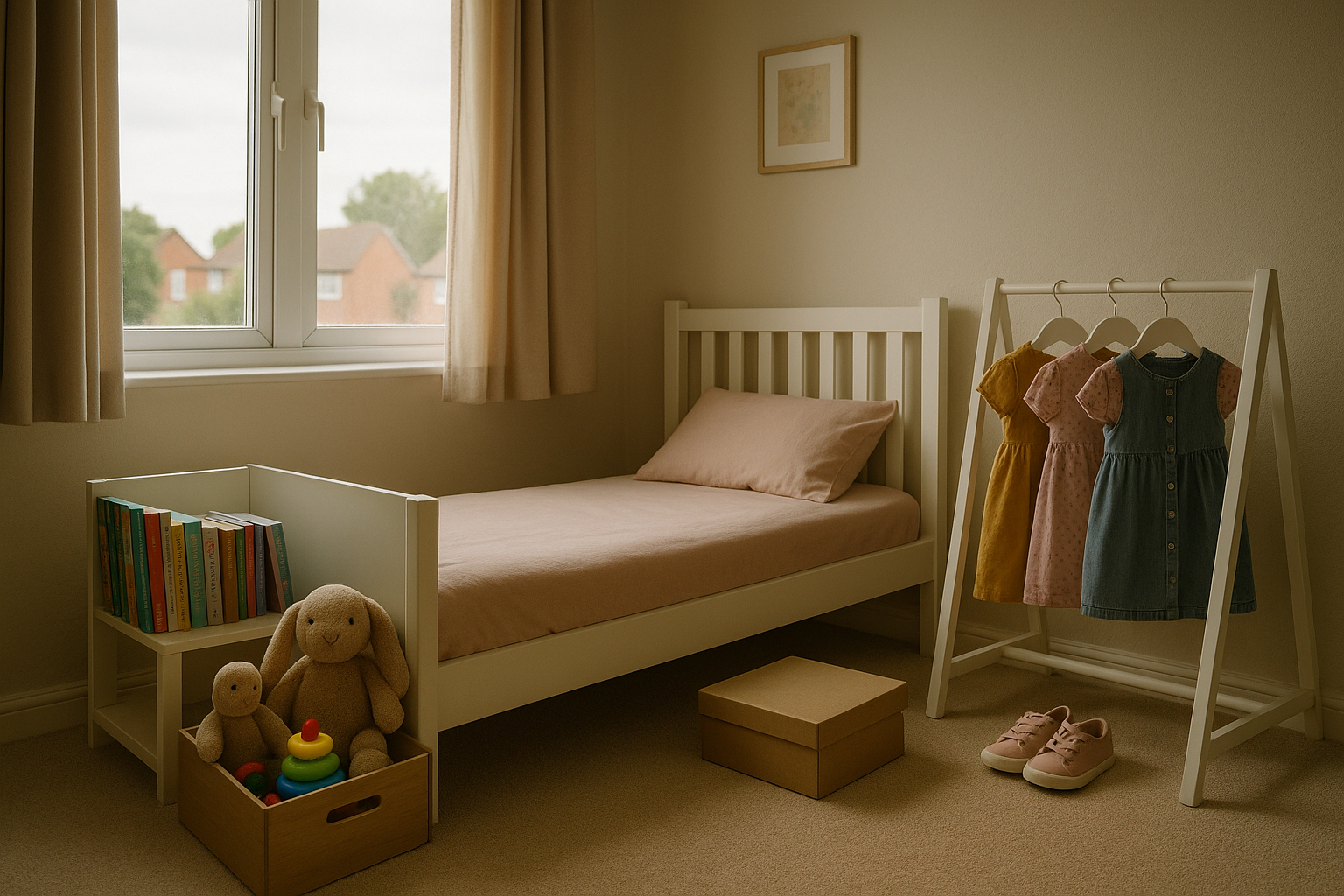
Her room remains. Perfect. Untouched.
Books unread. Toys unopened. Dresses uncreased.
The playhouse in the garden stands waiting, quietly fading beneath time and sun.
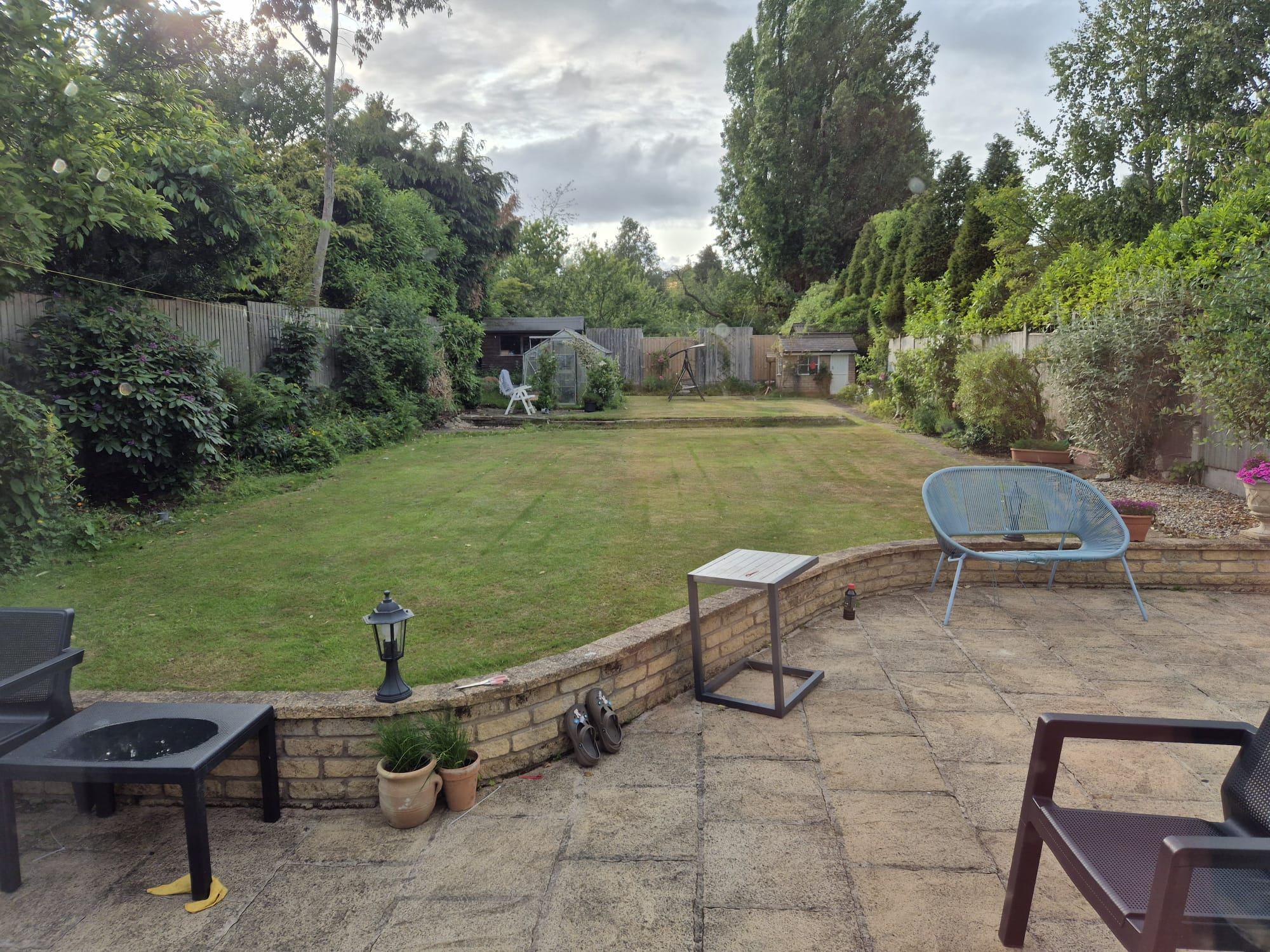
We sat together, my wife and I, in the room we had built for her. Her shoes were still by the door. The books on her shelf waited, untouched. Tiny hairbands lay in a dish beside the bed. A small pink cardigan still carried its tag. Her world had been prepared, piece by piece, by hands that had never met her.
We didn’t speak. We didn’t need to. The silence said everything.
Our piebald kitten, once too small to survive, had found her home.
But the daughter we longed for, prepared for, dreamed of—she never came.
Suspense did not resolve.
It dissolved.
A nursery filled with love.
A story with no ending.
A song that never began.
An echo, soft as her imagined voice, still lingers — in the waiting room, in the unopened drawers, in the air that never heard her laugh. In our empty playhouse, where every corner still hopes.
 Maq Masi Blog
Leave a comment