
Indian dohas and chhappas, timeless rhyming verses, are treasures of wisdom, wit, and musicality. Dohas, two-line couplets often in Hindi, Urdu, or regional languages like Braj and Awadhi, and chhappas, six-line satirical poems in Gujarati, captivate with poetic devices such as chhand (metre) and alankar (figures of speech). Dohas typically have 24 matras (syllabic instants) split into 13-11 or similar patterns, while chhappas use a flexible structure for sharp satire. Their rhythmic cadence resonates like a musical chord, distilling profound truths—about life, love, spirituality, or societal critique—into concise, lyrical forms.
These verses are rich in specific poetic techniques. Drishtanta, for instance, is an analogy where one concept is likened to another to illustrate a point, while viparati introduces irony, where the meaning contrasts with the words. Other common alankars include roopaka (metaphor), upama (simile), yamaka (repetition of a word or phrase with different meanings), and anupras (alliteration).
Poets like Amir Khusro, Kabir, Mirabai, Surdas, Tulsidas, Rahim, and Akha Bhagat, often untrained in formal poetic arts, wove verses that exposed dogma, hypocrisy, and societal ills while celebrating devotion and human experience. Akha Bhagat’s chhappas, in particular, ferociously attack religious dogma with biting satire. Below, we explore two verses from each poet—dohas for most, chhappas for Akha—arranged chronologically by their era, delving into their meaning, poetic beauty, and cultural significance, with Drishtanta and Viparati clarified for deeper understanding.
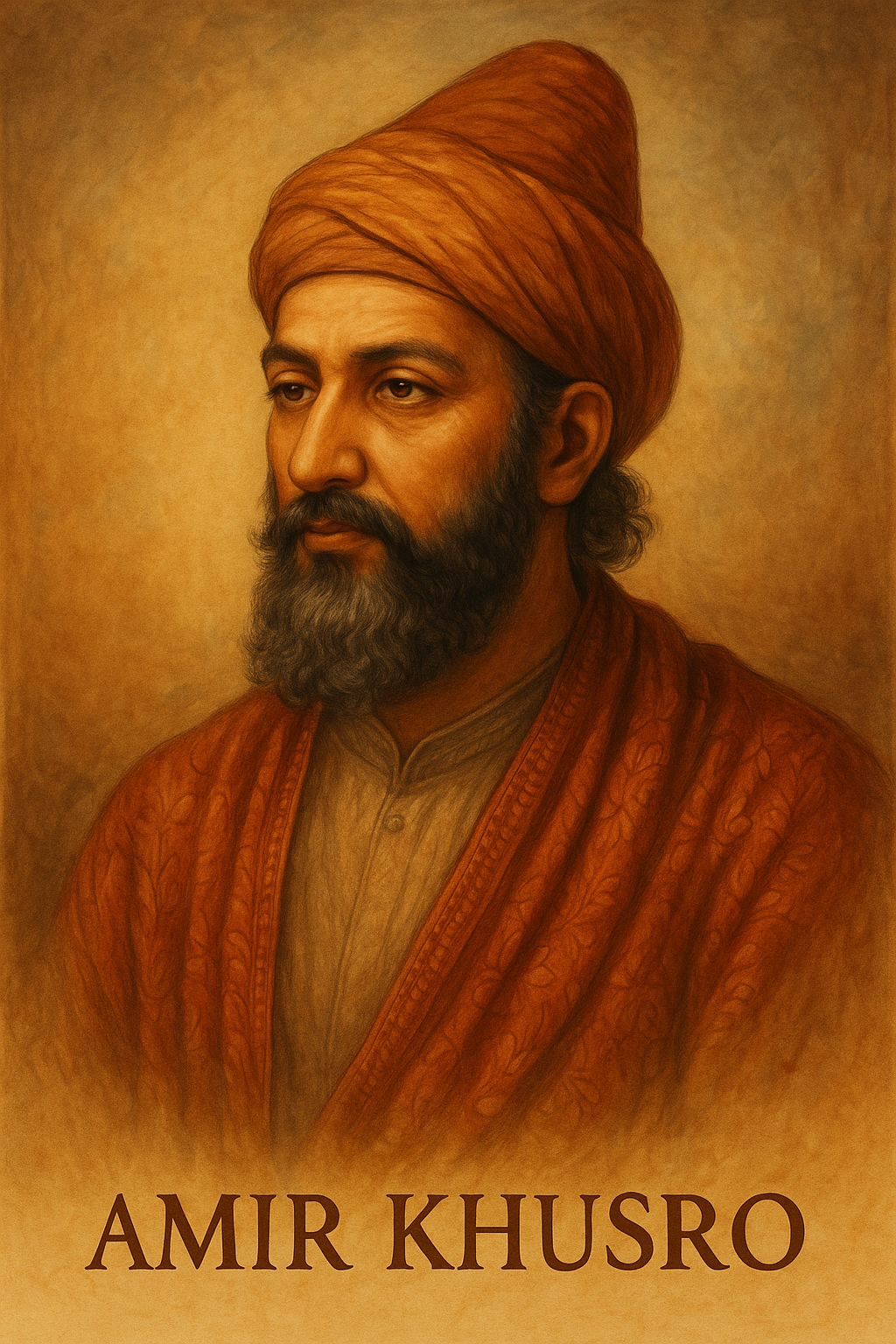
Amir Khusro (1253–1325): The Sufi Poet of Syncretism
A pioneer of Hindustani music, Khusro blended Sufi mysticism with folklore in Hindvi dohas.
Doha 1:
Khusro dariya prem ka, ulta vaaki dhaar,
Jo utra so doob gaya, jo dooba so paar.
Translation: Khusro says, love’s river flows in reverse; he who floats drowns, he who dives crosses over.
Meaning: Khusro uses viparati to depict divine love’s paradox—surrender leads to salvation—via drishtanta. The chhand creates a mesmerising effect.
Appeal: Its mystical depth shines in qawwalis.
Doha 2:
Khusro rain suhaag ki, jaagi pi ke sang,
Tan mera man piyu ka, dono ek hi rang.
Translation: Khusro says, on the night of union, I awoke with my beloved; my body, his soul, both one in colour.
Meaning: Khusro likens divine union to marital bliss via drishtanta. The roopaka (metaphor) and chhand evoke a qawwali-like trance.
Appeal: Its romantic mysticism captivates.
Kabir (c. 1398–1448): The Mystic Weaver of Truth
An illiterate saint-poet, Kabir used simple Hindi to challenge religious orthodoxy.
Doha 1:
Chalti chakki dekh kar, diya Kabira roye,
Dui paatan ke beech mein, sabit bacha na koye.
Translation: Seeing the grinding stones, Kabir weeps; between the two stones, nothing remains whole.
Meaning: Kabir uses drishtanta to compare life’s duality—good and bad—to grinding stones that crush everything, symbolising impermanence. The chhand creates rhythm, and yamaka (sound repetition) in “diya Kabira” adds musicality.
Appeal: Its vivid imagery and emotional depth make it a haunting folk song staple.
Doha 2:
Kaala kare so aaj kar, aaj kare so ab,
Pal mein pralaya hoyegi, bahuri karoge kab.
Translation: Do tomorrow’s work today, today’s work now; if the moment is lost, when will you do it?
Meaning: Kabir uses viparati to highlight the folly of delaying, urging action. The crisp chhand and anupras (alliteration) in “kaala kare” add urgency.
Appeal: Its motivational clarity shines in songs and speeches.
Mirabai (1498–1546): The Devotee of Divine Love
A Krishna devotee, Mira poured ecstatic love into Hindi dohas.
Doha 1:
Mira nache re man, Hari ke charan mein,
Prem ke rang rangi, jiya ki haran mein.
Translation: Mira’s heart dances at Hari’s feet; coloured in love’s hue, lost in divine ecstasy.
Meaning: Mira uses drishtanta to liken devotion to a dance of love. The roopaka and chhand evoke a musical trance.
Appeal: Its passionate tone shines in devotional music.
Doha 2:
Mira kahe Hari bin, jivan hai soon,
Prem bina jeevan mein, koi rang na goon.
Translation: Mira says, without Hari, life is barren; without love, life has no colour or virtue.
Meaning: Mira compares divine love to life’s essence via drishtanta. The upama (simile) and chhand create a heartfelt verse.
Appeal: Its emotional simplicity is timeless.
Surdas (c. 1478–1583): The Blind Bard of Krishna
A blind poet, Surdas composed Braj dohas celebrating Krishna’s divine play.
Doha 1:
Sur hari ke rang rache, man mohan ke saath,
Gopi sang ras rachyo, prem sudha barsaat.
Translation: Sur says, I’m steeped in Hari’s colours, with the charming Lord; with the gopis, he creates divine play, raining nectar of love.
Meaning: Surdas uses drishtanta to liken devotion to being dyed in Krishna’s love. The roopaka and chhand create a vivid melody.
Appeal: Its imagery is a bhakti music favourite.
Doha 2:
Sur kahe bin shyam ke, jeevan hai adhoor,
Krishna charan bina man, jaise deepak boor.
Translation: Sur says, without Shyam, life is incomplete; without Krishna’s feet, the mind is like a snuffed lamp.
Meaning: Surdas compares life without Krishna to an unlit lamp via drishtanta. The upama and chhand add emotional depth.
Appeal: Its heartfelt devotion resonates in spiritual gatherings.
Tulsidas (1532–1623): The Ramayana’s Poetic Voice
Author of Ramcharitmanas, Tulsidas crafted Awadhi dohas with moral lessons.
Doha 1:
Tulsi saba se ram piyara, sabse bada sahay,
Ram charan chitta rakhiye, bhavsagar tar jay.
Translation: Tulsi says, Ram is dearest, the greatest support; keep your mind on Ram’s feet, and cross the ocean of existence.
Meaning: Tulsidas uses drishtanta to liken devotion to Ram to a boat crossing life’s ocean. The upama and chhand create a devotional melody.
Appeal: Its spiritual depth is cherished in bhakti gatherings.
Doha 2:
Desh kaal karta karam, vachan vichar na heen,
Tulsi surtaru tar daridri, sursari teer maleen.
Translation: Consider place, time, doer, and deed before acting; without thought, even a wish-fulfilling tree brings poverty, and the Ganges’ bank turns impure.
Meaning: Tulsidas uses viparati to warn that sacred things lose value without mindfulness, with drishtanta enhancing the lesson. The chhand adds rhythm.
Appeal: Its practical wisdom resonates universally.
Rahim (1556–1627): The Poet of Devotion and Diplomacy
A Mughal courtier, Abdul Rahim Khan-e-Khana blended devotion and insight in Braj and Awadhi dohas.
Doha 1:
Rahiman paani rakhiye, bin paani sab soon,
Paani gaye na ubre, moti, manus, choon.
Translation: Rahim says, keep water close, without water all is barren; once water is gone, pearls, humans, and lime cannot survive.
Meaning: Using drishtanta, Rahim likens water to humility, essential for life’s value. The chhand and anupras create a soothing tone.
Appeal: Its lesson in humility is widely cited in moral teachings.
Doha 2:
Bani aisi boliye, man ka aapa khoy,
Aurana ko sheetal kare, aapahu sheetal hoy.
Translation: Speak words that calm your mind; they cool others and you too.
Meaning: Rahim compares kind words to cooling water via drishtanta. The anupras in “sheetal kare” and chhand enhance melody.
Appeal: Its emphasis on kindness is a timeless teaching tool.
Akha Bhagat (c. 1615–1674): The Satirical Scourge of Dogma
A Gujarati goldsmith and poet, Akha used chhappas to lambast religious hypocrisy with razor-sharp satire, influenced by Kabir’s Nirgunopasana.
Chhappa 1:
Tilak karatã trepan thayã, japmãlãnã nãkã gayã,
Tirth fari fari thãkyã charan, toy na pohto Harinẽ sharan.
Kathã suni suni futyã kãn, Akha toy na ãvyu brahmagyãn.
Translation: Applying tilak, I turned fifty-three, rosary holes worn out; feet tired from pilgrimages, yet I haven’t reached Hari’s refuge. Ears burst from discourses, Akha, still no enlightenment.
Meaning: Akha uses viparati to mock ritualistic devotion—tilak, rosaries, and pilgrimages yield no spiritual gain without understanding—via drishtanta. The chhappa’s rhyming chhand adds a biting rhythm.
Appeal: Its scathing critique of empty rituals resonates in reformist circles.
Chhappa 2:
Ek murakhne evi tev, patthar etlã pujẽ dev,
Pãni dekhi karẽ snãn, tulsi dekhi todẽ pãn.
E Akha vadu utpãt, ghanã Parmeshwar e kyãni vãt?
Translation: A fool’s habit: worships as many gods as stones; bathes at sight of water, plucks tulsi leaves on seeing the plant. Akha, this is sheer chaos—whence this talk of countless gods?
Meaning: Akha employs viparati to ridicule mindless polytheism and ritual obsession, using drishtanta to liken a fool’s actions to chaotic worship. The terse chhand amplifies the satirical punch.
Appeal: Its bold attack on religious dogma calls for rational spirituality.
The Timeless Allure of Dohas and Chhappas
Dohas and chhappas are pearls of wisdom, satire, and devotion, woven with chhand and alankar. Their musicality, born from metre and figures like drishtanta and viparati, makes them singable and unforgettable. Poets like Khusro, Kabir, Mira, Surdas, Tulsidas, Rahim, and Akha captured life’s joys, sorrows, and spiritual yearnings, with Akha’s chhappas uniquely skewering religious dogma. To miss these verses is to miss India’s cultural soul. Dive into their rhythms, let them enchant you, and uncover their timeless truths.

 Maq Masi Blog
Leave a comment