
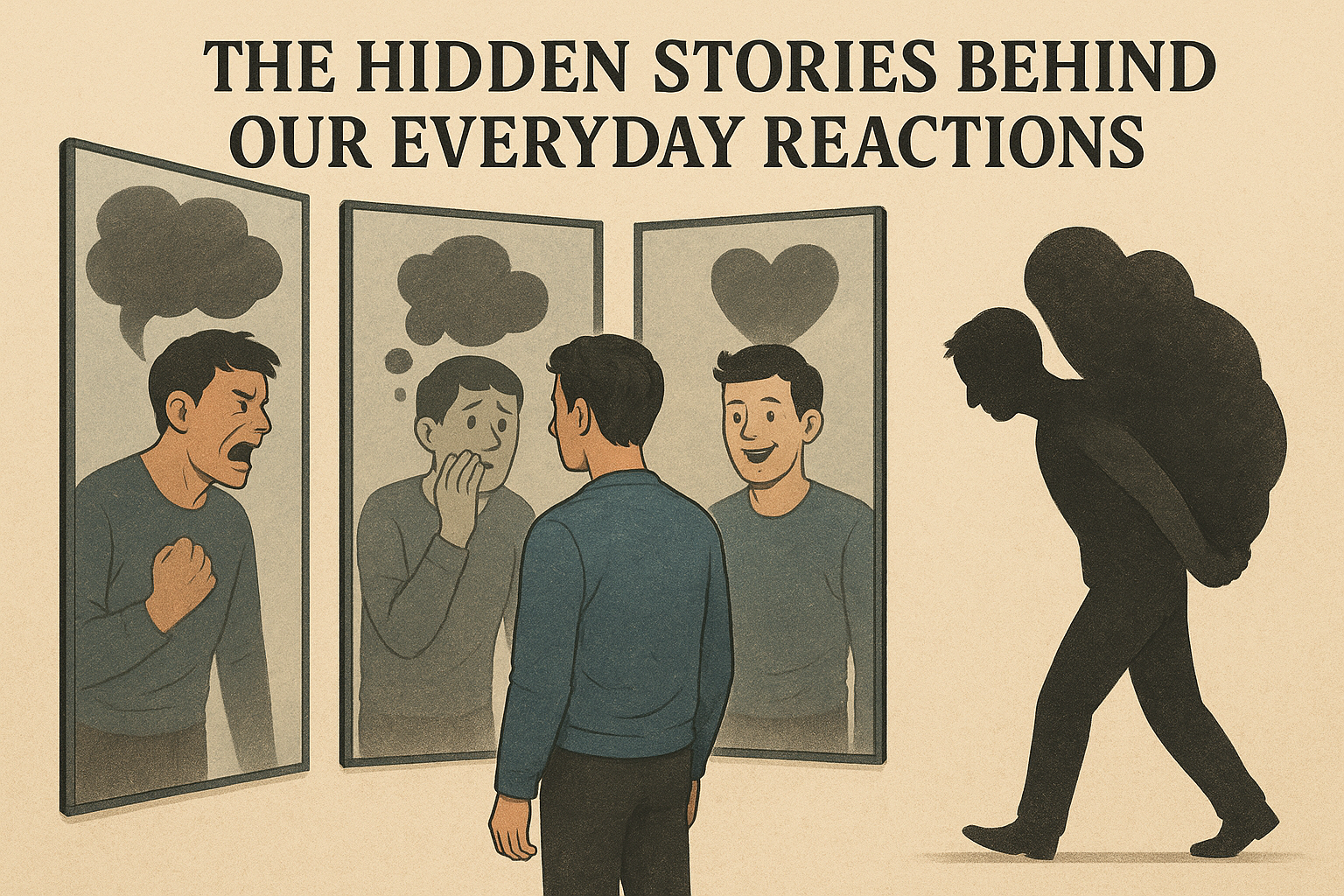
We’ve all known people whose behaviour puzzles us — the colleague who dominates every conversation, the friend who constantly seeks praise, the family member who withdraws at the first hint of conflict. At a glance, we shrug these off as quirks: “That’s just how they are.” But often, beneath the surface, these reactions reveal deeper, unspoken struggles — emotional echoes from the past that quietly shape how we move through the world.
What’s really going on?
Psychologist Carl Jung described complexes as hidden bundles of emotions, memories and beliefs formed by early experiences. These internal narratives influence us in ways we rarely question:
- The Overachiever who can’t bear criticism might be wrestling with an inferiority complex, haunted by childhood messages that their worth depended on flawless success.
- The Dominant Talker who steamrolls discussions may not be arrogant but defending against a deep fear of being irrelevant — a kind of superiority complex in disguise.
- The People-Pleaser who avoids conflict at any cost could be replaying an old script: “If I say no, I’ll be rejected.”
- The Social Butterfly who lights up every room might be running from a fear of being overlooked.
- The Risk-Taker who leaps into chaos may be chasing a fleeting sense of control over buried pain.
These aren’t random traits. They’re survival strategies — patterns learned to protect old wounds.
Why do we develop these patterns?
Our reactions are rarely just personality. They’re shaped by:
- Early environments: A child praised only for achievements may grow into an adult who ties worth to success. Another, constantly criticised, might learn to lash out first, or retreat into passivity, just to stay safe.
- Biology: Genetics can set the stage — high neuroticism may make someone more prone to anxiety or irritability; low conscientiousness can tip toward impulsivity.
- Unconscious scripts: Over time, these patterns become so familiar they masquerade as identity. “I’m just hot-headed.” “I’ve always been shy.”
Breaking the cycle: noticing what’s unseen
If you lead, parent, or simply care about others, recognising these deeper currents changes everything. The colleague who resists feedback might not be stubborn — they could be protecting old shame. The friend who jokes through pain isn’t necessarily carefree; they may fear being truly seen.
The same gentle curiosity is vital for ourselves. Ask quietly:
- Do I overreact to criticism? What old hurt does this stir?
- Why do I avoid conflict? What am I afraid will happen?
- Do I seek constant validation? What emptiness am I trying to fill?
The path to freedom
These patterns aren’t flaws; they’re the mind’s ingenious, if imperfect, ways of protecting us. But awareness loosens their hold. Sometimes that means therapy or honest conversation with someone we trust. Other times, it simply means pausing before we react and asking: “What’s really driving this?”
Because when we look behind our knee-jerk reactions, we do more than understand ourselves better. We create space for growth, compassion and deeper connection — with others, and with the hidden stories we’ve carried for far too long.
The first step toward change isn’t judgement. It’s recognition.
Key takeaways
✔ Our reactions often trace back to unconscious emotional patterns — complexes formed early in life.
✔ Childhood experiences, biology and learned behaviours shape these responses.
✔ Noticing these patterns — in ourselves and others — builds empathy and opens the door to change.
✔ True healing begins when we move from autopilot reactions to mindful curiosity.
“Between stimulus and response, there is a space. In that space is our power to choose.” — Viktor Frankl
 Maq Masi Blog
Leave a comment