
Have you ever watched a flock of birds twisting through the sky, forming intricate shapes in what seems like perfect synchrony? Or noticed the rhythmic undulations in desert sands, the curling waves at the seashore, or the geometric patterns etched in snow by wind? These phenomena extend to insect swarms, the cadence of sounds in a forest, or even the pulsing lights of fireflies. You’ve likely heard echoes of quantum theory—the observer and the observed—and how scientists or spiritual leaders invoke these to proclaim deeper truths, perhaps even divine ones. But what if these claims miss the mark? What if the real thread weaving through all this is frequency: waves oscillating at specific rates per second, manifesting across scales from radio frequencies (RF) to gamma rays?
In this exploration, I’ll share what I’ve come to understand, grounded in established science, drawing on research to show how wave phenomena and emergent behaviours explain these patterns. No mysticism required—just physics, biology, and a clarified look at quantum mechanics.
Emergent Patterns in Living Systems: Bird Flocks and Insect Swarms
Let’s start with those mesmerising bird formations, often called murmurations in species like starlings. It might look like telepathic coordination, but science reveals it’s an emergent property from simple local rules. Research shows flocking arises from three basic behaviours: separation (avoiding collisions), alignment (matching direction with neighbours), and cohesion (staying close to the group). Each bird reacts to about seven nearest neighbours, allowing the flock to respond almost instantly to threats like predators, creating wave-like propagations through the group. This isn’t communication in a fraction of a second via some ethereal link; it’s rapid visual cues and physics at play, with studies confirming that local pairwise interactions suffice to predict flock-wide order.


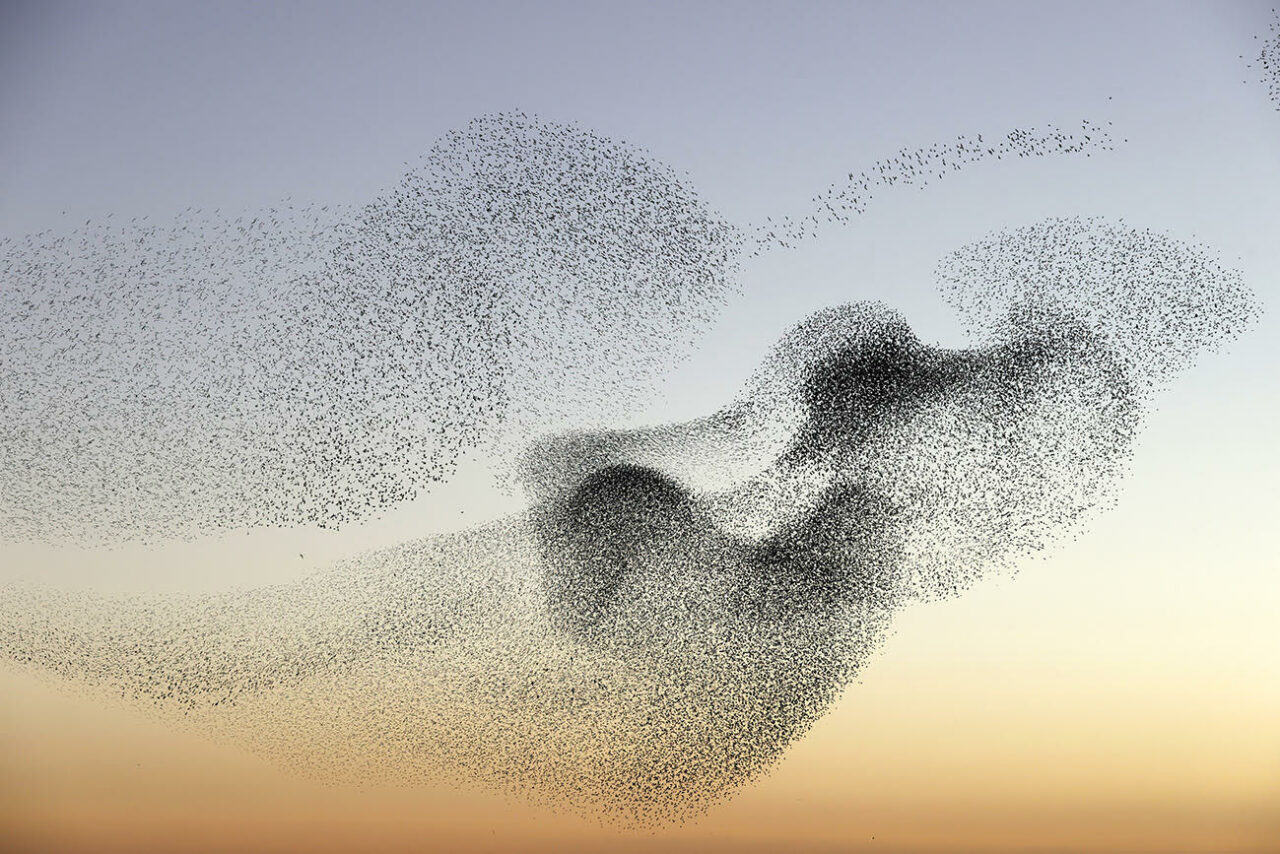

Similarly, insect patterns—think ant trails or bee hives—emerge from self-organisation. Termites build complex mounds through pheromone signals, creating rhythmic structures without a central blueprint. These are akin to wave propagations in biological systems, where frequency might refer to the rate of chemical oscillations or movement cycles.
Wave-Driven Patterns in the Non-Living World: Sands, Seas, and Snow
Turning to inanimate nature, the similarities are striking. Desert sands form dunes through wind-blown ripples, where waves of air interact with granular matter. As wind passes over sand, it creates patterns of ripples and larger dunes, often fractal-like and repeating across scales.


Sea waves follow suit, driven by wind energy transferring to water, forming undulating patterns that can be modelled as sinusoidal waves with specific frequencies.

Snow patterns, like sastrugi (wind-sculpted ridges), mirror this—wind erodes and deposits snow in wave-like forms.


Even light patterns, such as rainbows or auroras, stem from wave interference in electromagnetic fields. Sound rhythms? Acoustic waves vibrating at audible frequencies (20 Hz to 20 kHz for humans), creating beats and harmonies in nature, like ocean surf or wind through trees.
These aren’t coincidences; they’re governed by wave equations. Frequency here is the number of wave cycles per second (Hertz, Hz), and patterns emerge when waves interact constructively or destructively.
Quantum Theory: The Observer Effect Demystified
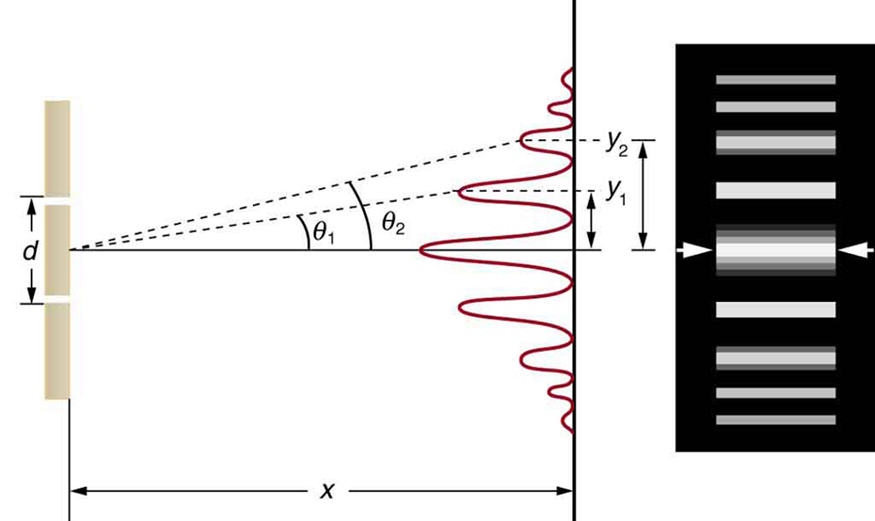
Now, quantum theory. The “observer and observed” concept often gets twisted into claims of consciousness shaping reality, fuelling ideas of divine insight. But scientifically, the observer effect in quantum mechanics isn’t about a conscious mind—it’s about measurement disturbing the system. In the famous double-slit experiment, electrons behave as waves (showing interference patterns) when unobserved but as particles when detected, because the measurement tool interacts with them, collapsing the wave function. This disturbance is physical, not mystical—no evidence supports consciousness alone altering outcomes.
Quantum waves are probability waves, with frequencies tied to energy via Planck’s relation (E = hν, where ν is frequency). Patterns in quantum systems, like electron orbitals, resemble natural waves but at atomic scales. Scientists aren’t “ignorant” for not invoking God; they’re adhering to empirical evidence, which shows these effects arise from wave-particle duality, not supernatural forces.

The Science of Frequency: Waves Per Second Across Spectra
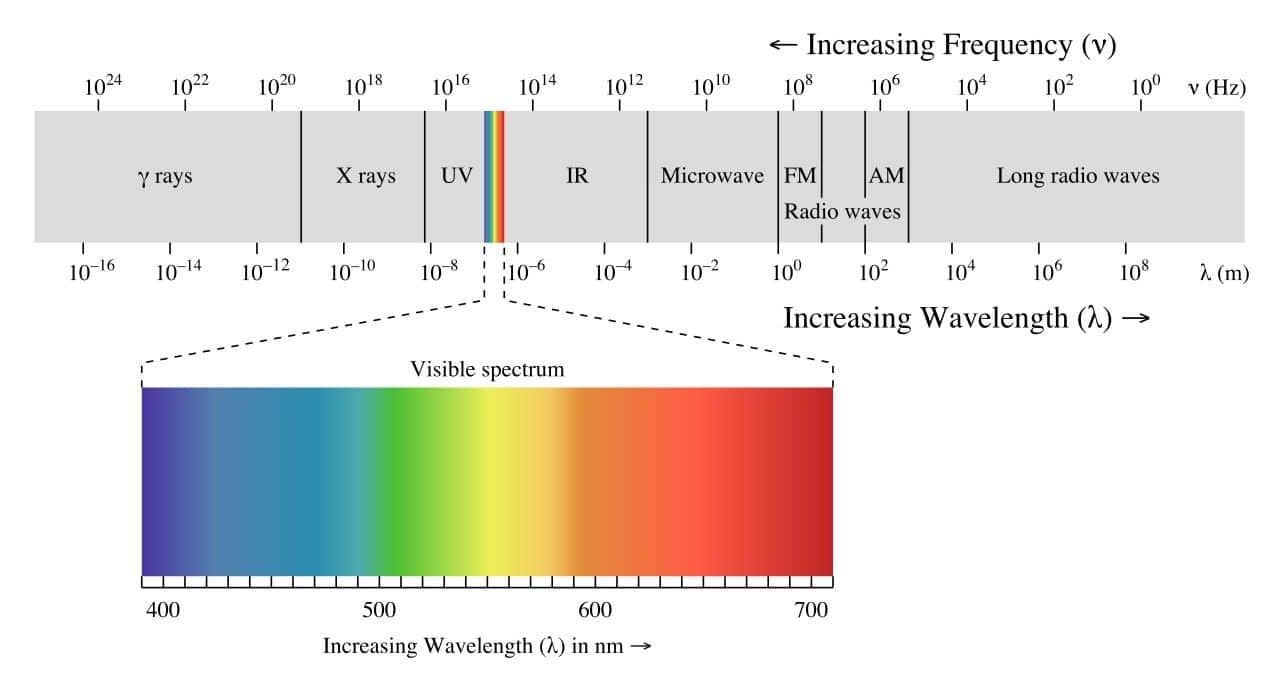
At the heart of it all is frequency—the rate of oscillations. In waves, it’s cycles per second (Hz). The categories I’ve mentioned are part of the electromagnetic (EM) spectrum, all forms of light at different frequencies:
| Category | Frequency Range (Hz) | Wavelength Range | Examples/Uses |
|---|---|---|---|
| Radio Waves (RF) | 3 Hz to 300 GHz | 100 km to 1 mm | AM/FM radio, mobile phones |
| Microwaves (incl. UHF: 300 MHz to 3 GHz) | 300 MHz to 300 GHz | 1 m to 1 mm | Wi-Fi, radar, cooking |
| Infrared | 300 GHz to 400 THz | 1 mm to 700 nm | Heat sensing, remote controls |
| Visible Light | 400 THz to 750 THz | 700 nm to 400 nm | Colours we see |
| Ultraviolet | 750 THz to 30 PHz | 400 nm to 10 nm | Sunburns, sterilisation |
| X-rays | 30 PHz to 30 EHz | 10 nm to 10 pm | Medical imaging |
| Gamma Rays | Above 30 EHz | Below 10 pm | Radiation therapy, cosmic rays |
“Magnetic” waves are electromagnetic too, as all EM waves have electric and magnetic components. Beyond EM, mechanical waves (like sound or seismic) have frequencies—Earth’s “heartbeat” (Schumann resonance) vibrates at ~7.83 Hz, syncing with brain waves in theta states. Resonance amplifies when driving frequencies match natural ones, explaining why patterns persist or amplify in nature.
Tying It All Together: Waves as the Universal Thread
These patterns—biological, geological, quantum—aren’t divine proclamations but outcomes of wave dynamics and self-organisation. Frequencies govern how energy propagates, creating observable rhythms without needing higher claims. Scientists build on evidence, not ignorance; religious interpretations add meaning but aren’t required for explanation.
This scientific lens enriches our appreciation of nature’s beauty through testable truths. I sometimes like to observe wave interference in a simple ripple tank or watch murmurations at dusk to remind myself of these principles. The universe hums with frequencies—let’s listen scientifically.
 Maq Masi Blog
Leave a comment