
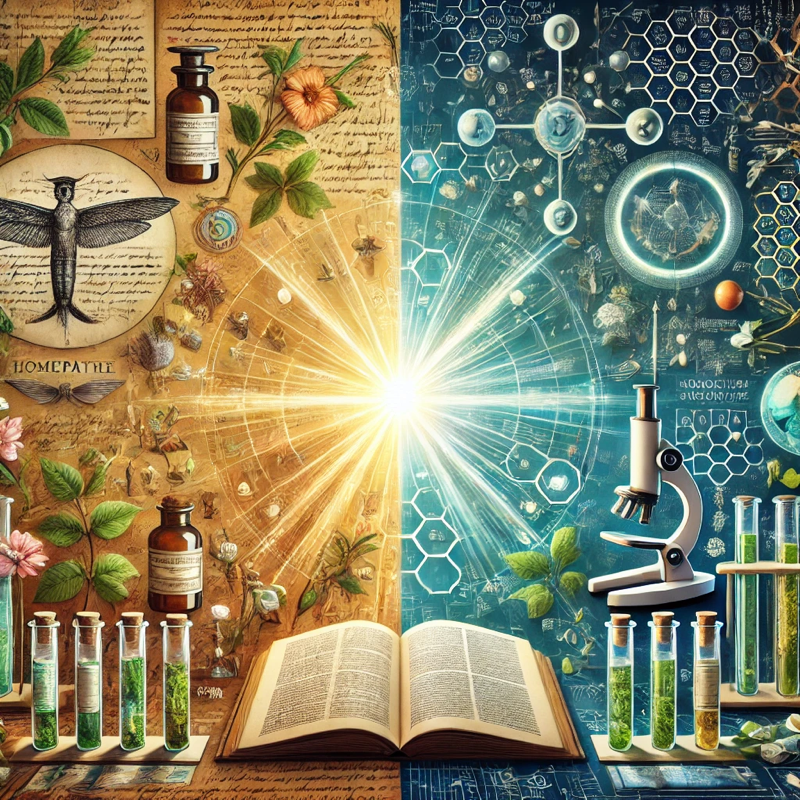
Homeopathy stands at a crossroads. It carries a rich legacy, a tapestry woven with the dedication of generations of practitioners who meticulously observed, documented, and refined a system of healing based on the principle of “like cures like.” This legacy, embodied in the vast materia medica, has offered relief to countless individuals seeking a gentler, more personalized approach to health. Yet, as we navigate the 21st century, the question arises: how do we reconcile homeopathy’s time-honored traditions with the demands of modern science?
The strength of homeopathy lies in its individualized approach. Each patient is seen as unique, and remedies are chosen to match their specific symptom picture. But this very strength presents a challenge. With thousands of remedies and varying potencies, the subjective nature of remedy selection introduces variability that calls for deeper investigation. Historical provings and case studies, though invaluable, often lack the standardization required for reproducibility. How can we honor the wisdom of the past while addressing these limitations?
The answer lies not in discarding tradition but in evolving it. Imagine a future where seasoned homeopaths collaborate with researchers to explore remedies in well-designed trials. For instance, remedies like Belladonna for acute inflammation or Nux Vomica for digestive upset could be systematically studied for specific applications. Positive results would validate their efficacy and create a foundation for standardized protocols, enhancing consistency and broadening acceptance.
This isn’t about reshaping homeopathy into conventional medicine but about leveraging modern tools to deepen our understanding. Advanced techniques in molecular biology or nanotechnology could uncover the mechanisms by which highly diluted substances exert their effects. Such research would bridge the gap between empirical observation and scientific validation, addressing skepticism while preserving the integrity of homeopathy.
Organopathy—using remedies targeted at specific organs—offers another avenue for exploration. Remedies like Carduus Marianus for liver support or Crataegus for cardiac health could be investigated for their potential to complement conventional treatments. Chronic conditions, where conventional medicine often meets its limits, could particularly benefit from integrating these organ-specific remedies into holistic care plans.
Consider the story of a pioneering homeopath who partnered with a research team to investigate the potential of homeopathic treatment for chronic lower back pain. Using a randomized controlled trial and patient-reported outcome measures, they found significant improvements in pain management and quality of life for patients receiving individualized homeopathic care. This example illustrates how tradition and modern methodology can coexist, paving the way for a broader understanding and acceptance of homeopathy.
Safety and quality control are paramount. Remedies must be free from contaminants such as heavy metals, pesticides, and microbial growth, and any residual solvents must meet strict standards. A robust regulatory framework ensures patient safety while bolstering public trust, positioning homeopathy as a credible component of modern healthcare.
The future of homeopathy hinges on our ability to blend tradition with transformation. By respecting its roots while embracing scientific rigor, we can honor the sacrifices and dedication of generations of homeopaths. Their case studies, insights, and pioneering efforts deserve validation and preservation for future generations. This is not about proving or disproving; it’s about deepening our understanding and ensuring that homeopathy thrives as a relevant and valuable system of healing.
The path forward requires a commitment to thoughtful exploration, open inquiry, and cooperative effort, aiming to preserve the essence of homeopathy while embracing opportunities for growth and understanding.


Leave a comment